News Flash
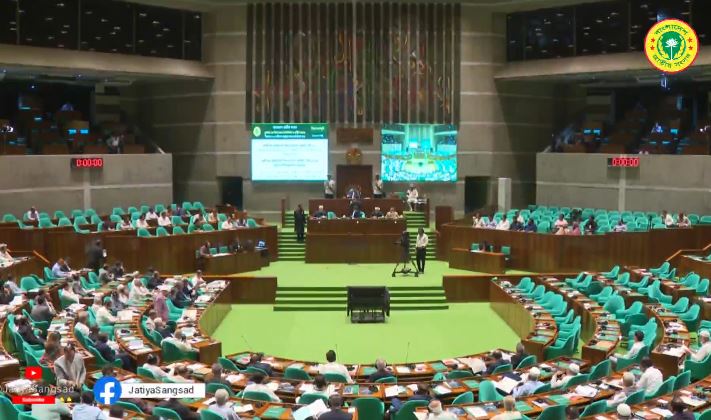
SANGSAD BHABAN, April 8, 2026 (BSS) - A bill titled the Protection and Conservation of Fish (Amendment) Bill, 2026 was passed in the Jatiya Sangsad today aimed at modernizing fisheries management, protecting breeding grounds, and rationalizing penalties for poor fishermen.
Fisheries and Livestock Minister Mohammad Amin Ur Rashid introduced and moved the bill, which seeks to amend the decades-old Protection and Conservation of Fish Act, 1950.
The proposed law introduces formal definitions for ‘Fish Sanctuary’ and ‘Water Body’ to provide a solid legal framework for conservation.
Under the new provisions, the government can declare any specific area or an entire water body as a sanctuary to ensure a safe environment for the breeding and growth of fish and other aquatic animals.
The definition of Water Body has been broadened to include rivers, canals, beels, haors, baors, coastal waters, and even seasonal floodplains or excavated pits.
In a significant move to curb indiscriminate killing of aquatic life, the bill explicitly prohibits electrofishing—the use of electric devices to stun or kill fish.
It also bans the use of explosives, guns, and bows and arrows in internal, coastal, and marine waters.
The bill further introduces the concept of Other Effective Area-based Conservation Measures (OECM).
This aligns Bangladesh with international biodiversity commitments, allowing for the sustainable management of areas that are vital for biodiversity but are not formal protected areas.
The amendment proposes a shift from rigid minimum jail terms to maximum limits to protect the livelihoods of marginalized fishermen.
For general violations, the penalty is proposed to be a maximum of 2 years in prison or a fine of up to Tk 5 lakh, increased from the previous Tk 5,000.
For more serious specific offenses, the jail term is determined at 3 years with a fine of up to Tk 10 lakh.
Fisheries and Livestock Minister Amin Ur Rashid, in the statement of objects and reasons, noted that previous laws often forced poor fishermen into extreme hardship due to mandatory minimum sentences.
The new structure allows for judicial discretion while significantly increasing fines to deter wealthy business interests involved in illegal fishing.
The bill empowers the government to take direct measures against the destruction of fish ecosystems in haors and coastal areas caused by unplanned infrastructure or development projects.
Upon its passage, the bill will repeal the temporary ordinances issued in 2025 and 2026, while validating all actions taken under those orders.
Later, the Bill was passed by voice vote.