News Flash
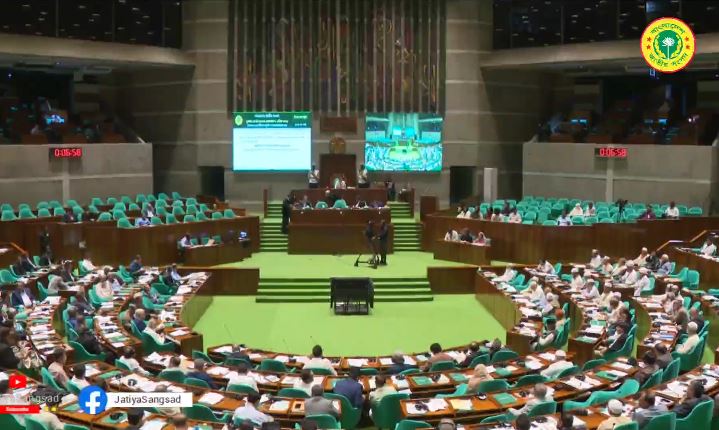
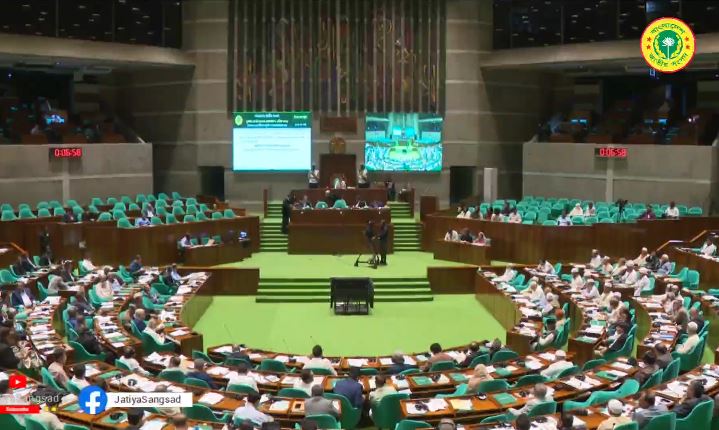
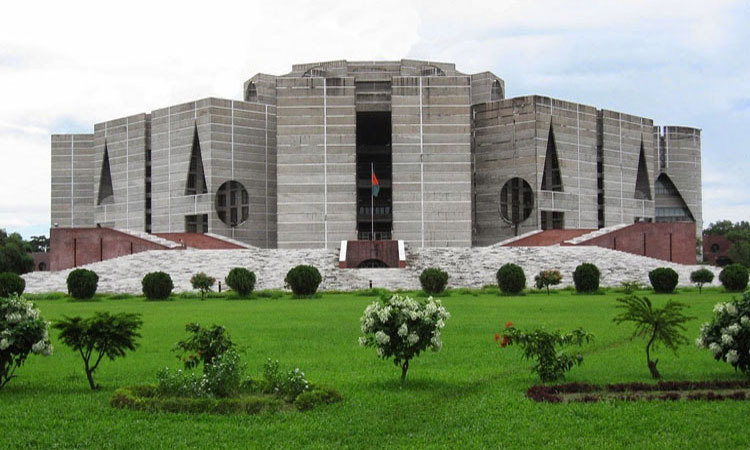
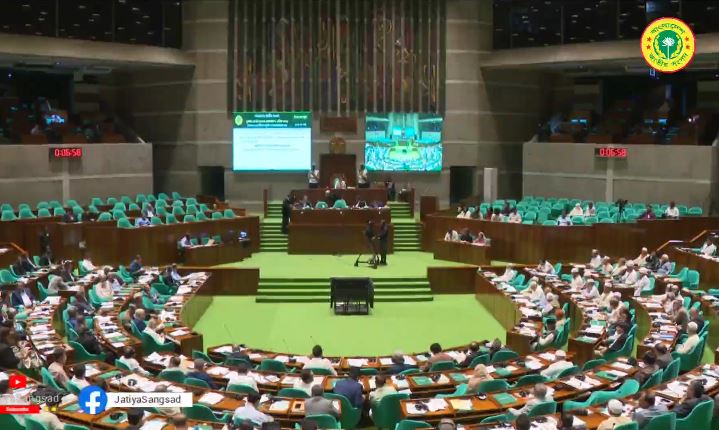
SANGSAD BHABAN, April 8, 2026 (BSS) - The "Spatial Planning Bill, 2026," was
passed in the Jatiya Sangsad today in a bid to ensuring sustainable
development, protecting agricultural land, and managing rapid urbanization
across Bangladesh.
This comprehensive legal framework bill, placed and moved by Housing and
Public Works Minister Zakaria Taher, seeks to replace the "Spatial Planning
Ordinance, 2025" and thus establish a structured hierarchy for land use and
infrastructure development.
The proposed law introduces three distinct levels of spatial planning to
ensure every inch of the country is developed under a strategic vision. These
are: National Spatial Plan (NSP): A long-term strategic document for the
entire country reflecting socio-economic goals and resource optimization.
Regional Spatial Plan (RSP): Mid-term strategic frameworks for specific
administrative divisions or unique geographical regions like the Haor,
coastal belts, or hilly tracts.
Local Spatial Plan (LSP): Detailed, actionable plans including Structure
Plans and Detailed Area Plans (DAP) for specific jurisdictions under local
authorities.
To oversee the implementation, the bill proposes the formation of the
National Spatial Planning Council, headed by the Minister of Housing and
Public Works.
The council will include secretaries from nearly 20 ministries, mayors of
city corporations, and experts from BUET and professional institutes like the
Bangladesh Institute of Planners (BIP).
Additionally, an Inter-Ministerial Committee and District Committees (led by
Deputy Commissioners) will be formed to monitor progress and resolve
inconsistencies between various government departmental schemes.
The bill goes tough against unplanned construction. According to the draft:
No individual or organization can undertake any activity that contradicts the
approved spatial plans.
Authorities are empowered to halt illegal projects and demolish unauthorized
structures.
Violators may face up to two years of imprisonment, a fine of up to Taka 20
lakh, or both.
Offenses under this law will be triable through mobile courts under the
Mobile Court Act, 2009.
In the objective of the Bill, the Minister said that the bill highlights that
rapid urbanization has led to high population density in cities, causing the
loss of valuable agricultural land and biodiversity.
The new law mandates that all spatial planning must prioritize health
protection, environmental balance, and the preservation of cultural heritage.
It also requires specific rehabilitation plans for those displaced by land
acquisition processes.
Before final approval, all draft plans must be published on ministry websites
and in national dailies for public review. A mandatory 30-day public hearing
process will be held to address objections and suggestions from citizens.
Later, the Bill was passed by voice vote.
Meanwhile, the day's JS sitting passed a good number of bills which seek to
transform ordinances into laws.