News Flash
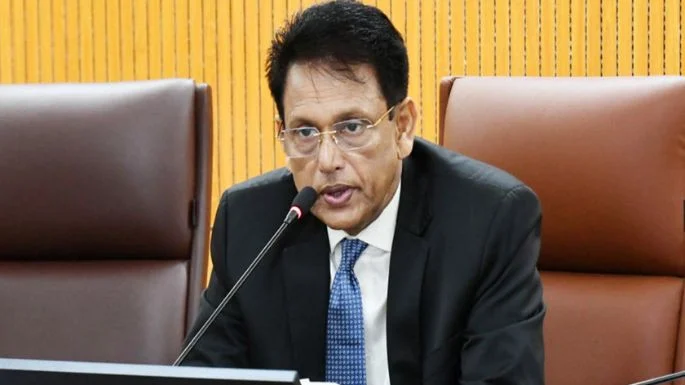
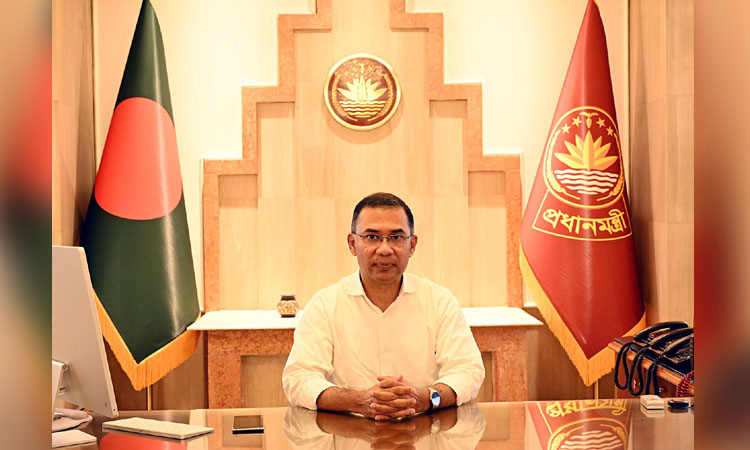
SANGSAD BHABAN, April 23, 2026 (BSS) - Finance Minister Amir Khosru Mahmud Chowdhury today reaffirmed the government’s goal of transforming Bangladesh into a trillion-dollar economy by 2034 as well as project Bangladesh as a developed and self dignified nation in the global arena.
“With the cooperation of all, it would be possible to build a sustainable, prosperous, and democratic Bangladesh, transform the country into a trillion-dollar economy by 2034, and establish it as a developed and dignified nation on the global stage,” he said.
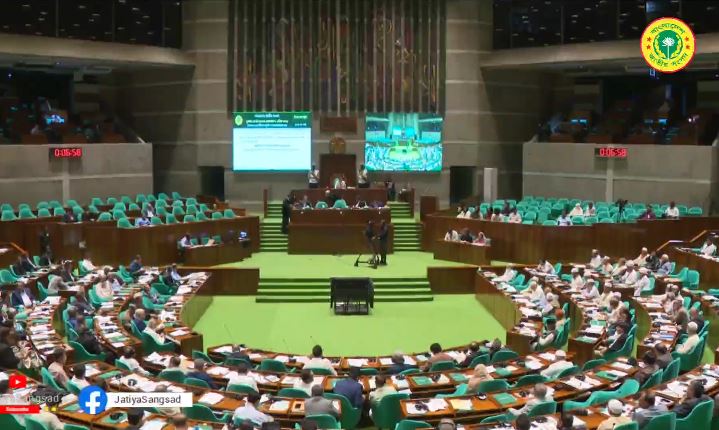
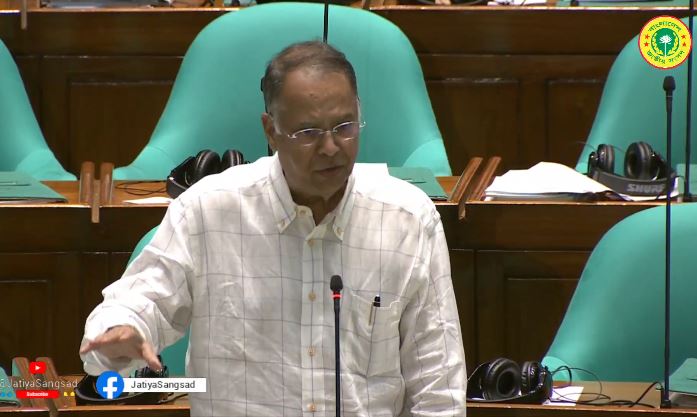
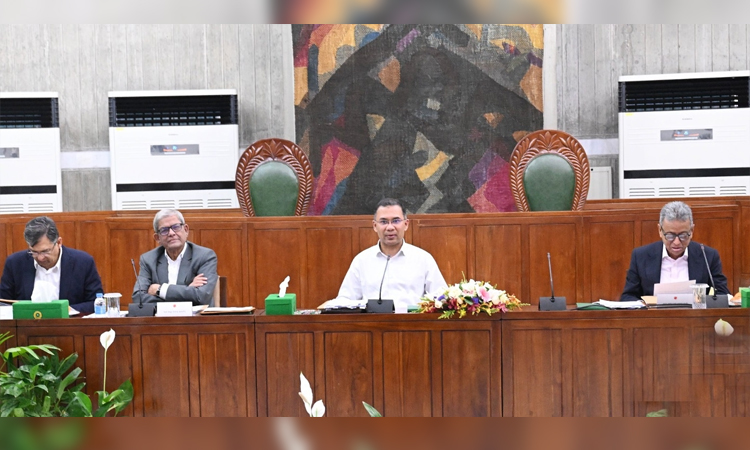
The Finance Minister said this while placing the progress report on budget implementation (2nd quarter) of the current fiscal year (FY26) in the Jatiya Sangsad today.
He said continuity, strengthening institutional capacity, ensuring good governance, and creating an investment-friendly environment are crucial to face prevailing economic challenges.
He said the government has undertaken initiatives to liberalize and deregulate the economy and facilitate ease of doing business, alongside restoring discipline in the financial sector.
“At the same time, opportunities have been created to place the economy on a stronger footing through enhancing revenue mobilization capacity, diversifying exports, expanding skill- and technology-driven production, and encouraging new domestic and foreign investments,” he said.
Khosru said efforts are also underway to reinforce good governance in the banking sector, reduce non-performing loans, and implement risk-based supervision mechanisms. “These measures are expected to enhance stability and transparency in the financial sector, which will, in turn, support sustainable long-term growth,”
The Finance Minister also expressed optimism that, guided by the spirit of independence and the ideals of the War of Liberation, keeping up the dreams of Shaheed President Ziaur Rahman and former Prime Minister Begum Khaleda Zia as well as inspired by national aspirations and leadership, the country will be able to overcome all adversities through collective public support and pragmatic government initiatives.
He said the dynamic leadership and visionary programmes of the present Prime Minister would accelerate this journey.
The Finance Minister also stressed that sustained reforms, effective governance, and collective efforts will be essential to achieving a resilient, prosperous, and developed nation.
The minister highlighted that according to International Monetary Fund (IMF) projections, global economic growth is expected to remain stable, with GDP growth likely to reach 3.3 percent in 2025 and hover around 3 percent in the medium term.
Emerging and developing Asian economies are expected to lead with around 5 percent growth, while advanced economies may see a modest slowdown to 1.7 percent, he said.
Global inflation, which peaked at 8.7 percent in 2022, is projected to decline to 4.2 percent in 2025 and further to 3.8 percent in 2026. “Inflation in key import partners such as China and India is also expected to remain moderate, which may help Bangladesh ease domestic price pressures,” he said.
However, the minister cautioned that the ongoing Middle East crisis could disrupt this outlook.
Citing Asian Development Bank (ADB) estimates, he said prolonged conflict may reduce global growth by up to 0.9 percentage points and South Asian growth by as much as 1 percentage point. The crisis has already led to sharp increases in global fuel and fertilizer prices, posing risks to Bangladesh’s energy security and inflation management, he said.
Highlighting domestic economic performance, the minister said revenue collection grew by 13.6 percent in the second quarter (July–December) of FY2025–26, significantly higher than 4.7 percent in the same period of the previous fiscal year. Government expenditure rose by 14.1 percent, while implementation of the Annual Development Programme (ADP) reached 13.56 percent of total allocation.
Khosru said foreign exchange reserves increased to $33.19 billion at the end of December 2025, up from $26.22 billion a year earlier.
The minister noted that inflation has shown a downward trend, with the 12-month average declining to 8.77 percent in December 2025 from 10.34 percent a year earlier.
He expressed the hope that ongoing policy measures—including contractionary monetary policy, prudent public spending, and supportive fiscal initiatives—will help bring inflation down to 7 percent by the end of the current fiscal year.
Looking ahead, inflation is projected to decline further to 7.5 percent in FY2026–27, 6.5 percent in FY2027–28, and 6 percent in FY2028–29, alongside a gradual acceleration in economic growth.
The minister acknowledged that challenges remain, including global trade protectionism, rising competition, high interest rates, and structural constraints affecting private investment and revenue mobilization.
To address these issues, he said the government is prioritizing an investment- and export-led growth strategy.
Key initiatives include deregulation, ensuring policy continuity, expediting approval processes, improving access to land and energy, and strengthening legal protections for investors.
“Efforts are also underway to simplify licensing systems and expand digital one-stop services under the Bangladesh Investment Development Authority (BIDA),” he said.
In the financial sector, Khosru said reforms are being implemented to enhance governance, reduce non-performing loans, and introduce risk-based supervision to ensure stability and transparency.
The finance minister expressed optimism that Bangladesh’s strong fundamentals—including a large and productive workforce and expanding industrial capacity—will support economic recovery and long-term growth.