News Flash
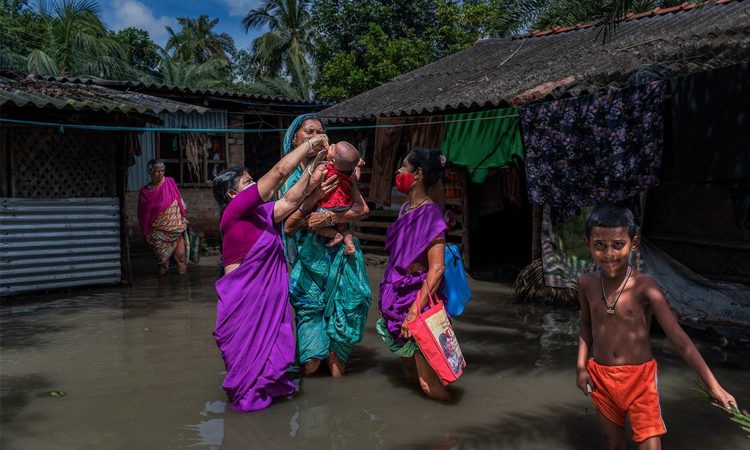
DHAKA, June 18, 2026 (BSS) - As Bangladesh braces against the mounting challenges of climate change, three government entities - the Local Government Division (LGD), the Ministry of Agriculture (MoA) and the Ministry of Water Resources (MoWR) - have emerged as the frontline drivers of resilience, together accounting for more than 53 percent of the country's total climate-related expenditure in the proposed Fiscal Year 2026-27 (FY27) budget.
According to budget documents, the three agencies shoulder the bulk of adaptation and resilience-building programmes under a total climate allocation of Tk 51,746 crore, underscoring the government's continued focus on protecting communities, food systems and critical infrastructure.
Finance Minister Amir Khosru Mahmud Chowdhury highlighted the urgency of climate financing, saying Bangladesh stands at a critical juncture where vulnerability intersects with the pursuit of sustainable and inclusive development in his budget speech.
"In this context, climate finance is not merely a source of support; it is a key enabler of resilience, innovation, and sustainable development," he said.
The LGD has been allocated Tk 11,219 crore for climate-related activities, the highest among all ministries and divisions, with climate expenditure constituting 27.88 percent of its total budget.
The division serves as the government's primary platform for community-level adaptation, undertaking construction of climate-resilient rural roads, bridges and culverts, development of cyclone and flood shelters, excavation of canals to improve drainage, and provision of safe drinking water and sanitation services in vulnerable areas.
Besides, the Ministry of Agriculture has received Tk 10,623 crore for climate programmes, representing 36.78 percent of its total budget. Its resilience efforts focus on safeguarding national food security through salinity-resilient, drought-tolerant and flood-resistant crop varieties such as BRRI Dhan 67, alongside climate-smart irrigation and soil health technologies.
More than 95 percent of its allocation is concentrated in Food Security, Social Protection and Health, reflecting the priority of sustaining agricultural production under shifting climatic conditions.
On the other hand, the Ministry of Water Resources has been allocated Tk 5,825 crore, with climate expenditure making up 55.31 percent of its total budget - the highest proportion among all ministries.
It leads infrastructure-based adaptation through projects on riverbank protection, flood management, land reclamation and salinity control.
A flagship initiative involves excavation of 20,000 kilometres of canals and rivers over five years to improve navigability and drainage, strengthening the country's capacity to manage water-related climate risks.
The climate spending priorities align with the FY27 budget's broader strategic direction.
"The Budget is built around ten strategic priorities: ... Management of Life, Nature, Environment, and Water Resources: Protecting the nation from the impacts of climate change and preserving biodiversity... to build a sustainable, green, climate-resilient, and livable future for generations to come," the finance minister said.
Reaffirming the government's commitment, Amir Khosru Mahmud Chowdhury stressed that one of the key objectives is to address climate challenges and build a green and sustainable Bangladesh for future generations.
He added that the climate budget reflects both the country's challenges and the government's "firm commitment to building a climate-resilient future."
The combined investments by the LGD, Agriculture Ministry and Water Resources Ministry indicate that Bangladesh's resilience strategy is anchored in strengthening local infrastructure, ensuring food security and improving water resource management as the nation confronts the growing impacts of climate change.