News Flash
DHAKA, April 23, 2026 (BSS) – The prevailing power crisis is expected to ease by May as the Ministry of Power, Energy and Mineral Resources has already taken some measures to improve the power production and supply.
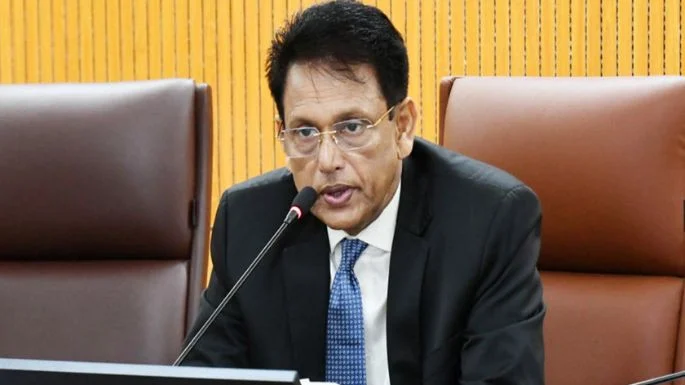
“The government is hopeful that the power crisis will end by May. The crisis has been created due mainly to Middle East conflict, which has halted movement of cargoes of imported LNG through the Strait of Hormuz,” said energy ministry’s spokesperson and joint secretary Umme Rehana.
Speaking at a press conference at the ministry's conference room, she said the power shortage has been created due to energy crisis, as a result it has not been not possible to generate sufficient power. The shortfall in generation has forces the authorities shed load in some areas in the country, she added.
However, Rehana said that the power secretary held a meeting on April 7 with distribution companies and ordered them to take more effective steps to improve the power supply.
She said that the power division implements routine load shedding every year during the summer, adding, “But this time it has increased a little because of the Middle East conflict that has affected the import of LNG through the Strait of Hormuz.”
“The government usually imports liquefied natural gas (LNG) through the Strait of Hormuz, but Hormuz Strait remained closed. So we are not able to import it through the Strait of Hormuz,” she added.
Under the prevailing situation, the energy division has been purchasing fuel from spot market and disbursing it to the power division, said the spokesperson.
“We generate electricity through five methods -- natural gas, diesel, coal, hydro, and solar and wind power. We also import some electricity. Apart from the natural gas, the government can generate electricity at the lowest cost from hydro system,” she added.
Bangladesh produces only 230 megawatts of power from hydro, which is only one percent of the total production.
“If we calculate financially, the comparatively low cost power is being generated from natural gas, but our country does not have that much of natural gas reserves,” she said.
Rehana said that 43 percent of the electricity comes from natural gas, which is 12,154 MW, adding, “If we produce entire power from natural gas. We need 2,000 mmcfd of gas. But the energy division is not able to supply that much.”
“If they could have given us 1,200 mmcfd of gas then we could produce 7,200 MW of electricity at lower cost. But they are able to give us only 850 to 900 mmcfd of gas,” she added.
Despite this crisis, the government has been trying to keep Dhaka city out of the load shedding. Some load shedding is being taken place in villages, she said.
The joint secretary said that demand for power on Wednesday was 15,767 MW, and the production was 13,681 MW. There is a power shortage of about 3,000 MW today.
She said that in the first week of May, about 2,000 MW of more power will be generated.Then the load shedding will reduce. Power is being supplied to agriculture and industry on priority base, she added.