News Flash
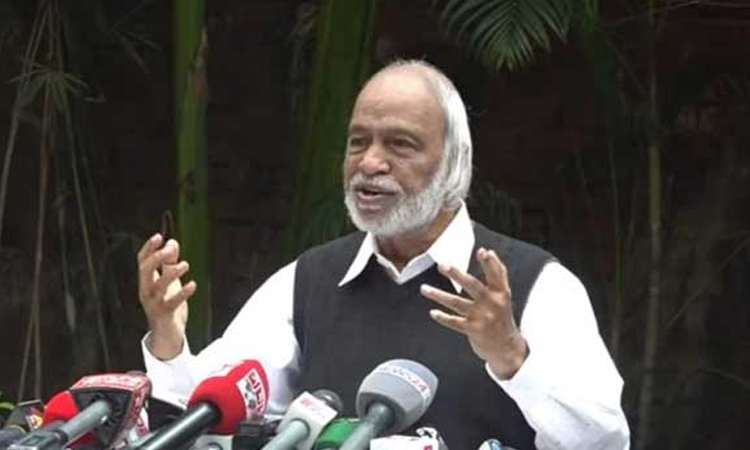
DHAKA, May 13, 2026 (BSS) – Dr. Abdul Moyeen Khan, standing committee member of the Bangladesh Nationalist Party (BNP), today underscored the need for strengthening democratic institutions, saying Bangladesh has returned to a democratic process and now focus must be given to institutional building to secure the future of democracy.
“We’ve now returned to a system, and our main responsibility at this moment is institutional building,” he said while speaking at a roundtable meeting, organised by Citizens Forum Bangladesh, at Hotel InterContinental in the capital.
Drawing comparisons with the United States, he said durable democratic institutions built over centuries have enabled America to sustain its democratic character despite political challenges.
He said the current parliament carries a historic responsibility to establish strong democratic institutions capable of safeguarding Bangladesh’s future democratic order.
“If we can strengthen those institutions, this parliament will be remembered as a milestone in Bangladesh’s democratic history,” said the senior BNP leader.
Referring to the current political climate, Moyeen Khan said the space for public expression has significantly expanded, with people now freely speaking through the media, social media and public discussions.
He expressed optimism about the future role of parliament, saying the present House was formed through sacrifice and should work in the interests of the people.
“If we can move this parliament forward with balance and responsibility, Bangladesh will be able to set a democratic example for the future,” he added.
Describing the political transition following August 5, 2024, he termed the period up to February 12 as a phase shaped by a “doctrine of necessity”.
Keynote speaker Prof Borhan Uddin Khan said the current parliament must act as a guiding force for a “New Bangladesh”.
“This parliament must become a beacon that shows the right direction to a nation emerging from crisis,” he said.
He stressed that the sacrifices made during recent political movements should never be forgotten and called for a democratic culture rooted in tolerance and reason.
“We want a parliament where debates are driven by logic, not hatred, and which serves as the ultimate refuge for ordinary people,” he added.
Presiding over the discussion, Prof Dr Anwarullah Chowdhury, former vice-chancellor of Dhaka University said building an educated and humane society is essential for sustaining democracy.
“If we can formulate a modern education policy, we will be able to create enlightened citizens and patriots capable of transforming the society,” he said.
UGC Chairman Mamun Ahmed said people’s expectations from a directly elected parliament are always high, and lawmakers must remain responsive to those expectations.
He said a healthy parliamentary culture can emerge when differing opinions are properly represented and consensus is developed through dialogue and democratic practice.
Among others, Prime Minister’s speech writer Mahfuzur Rahman, economist Badiul Alam Majumdar, photographer and social activist Shahidul Alam, Vice-Chancellor of Jahangirnagar University Prof Mohammad Kamrul Ahsan, and leaders of different student organisations were present at the programme.