News Flash
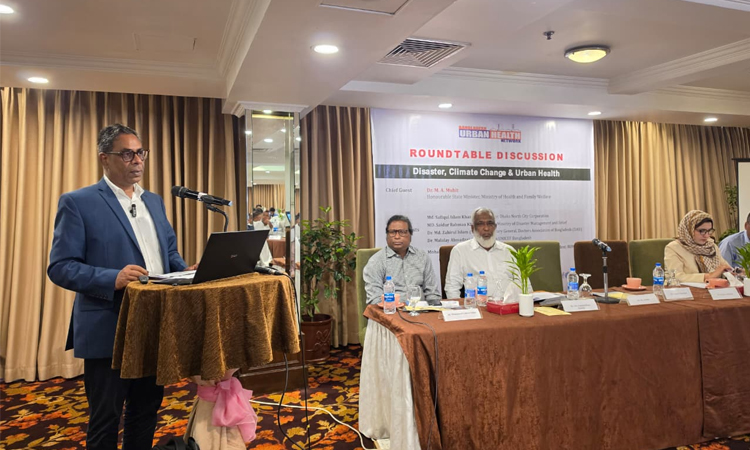
DHAKA, June 15, 2026 (BSS) – State Minister for Health and Family Welfare Dr MA Muhit today sought revision of the existing disaster law and related standing orders clearing further his ministry’s role during major calamities like earthquakes.
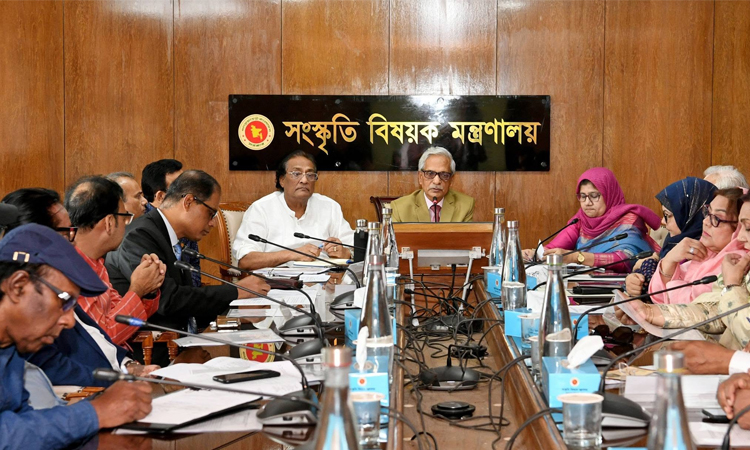
“The responsibilities and obligations of the health ministry during disasters are not clearly defined (in existing law & standing orders),” he told a roundtable titled Disaster, Climate Change and Urban Health.
Muhit, a doctor and public health expert by background, said the existing disaster management law should be reviewed and updated through consultations involving legal experts, public health specialists and engineers.
“If they can prepare specific recommendations for updating the law, the government will take prompt initiatives to implement them through discussions with the ministries of Health, Disaster Management and Relief, and Law,” he said.
Muhit feared a major earthquake could disrupt communication systems making it extremely difficult the emergency rescue operations and medical services.
Urban Health Network staged the discussion at a hotel in Banani in the capital where Bangladesh Doctors Association (DAB) Secretary General Dr Zahirul Islam Shakil, UNICEF Chief of Health Dr Malai Ahmadzai and senior health professionals took part in the discussion.
The junior minister recalled the Rana Plaza tragedy saying it was only a 10-storey building but following the collapse of that single structure “we witnessed the tragic deaths of more than 1,000 people and injuries to around 2,500 others”.
“If 100 or 200 buildings collapse in a densely populated megacity like Dhaka, it is difficult even to imagine the scale of the catastrophe,” he added.
He called Dhaka the “nerve centre” of the country as the city serves as the centre of the country's 200 million people and warned that hospitals, power supply and water systems could collapse in the event of a major earthquake.
Muhit also stressed the need for an integrated action plan involving the disaster management, social welfare and health ministries of to ensure long-term rehabilitation of disaster victims following emergency medical treatments.
He said mental health issue was also crucial as people suffer not only physical injuries but also severe psychological trauma during after disasters.
“Even volunteers engaged in rescue operations often experience intense mental stress. Psychosocial counselling is frequently overlooked in our overall disaster preparedness and response plans, and it must be incorporated,” he added.
The state minister also called for the formation of a large volunteer force by engaging hundreds of thousands of young people and providing them with professional training to address earthquake risks in Dhaka.
Speaking about recent government initiatives, Muhit said the Institute of Disaster Management and Research had been launched in Gazipur only a few weeks ago.
Noting Bangladesh's long experience in disaster management, he said more field research centres should be established in flood-prone rural areas through both government and private initiatives.
Such efforts, he added, could help Bangladesh emerge as an international hub for disaster management research and practice, enabling other countries to learn from the country's experience.