News Flash
By Shafiqul Islam Bebu
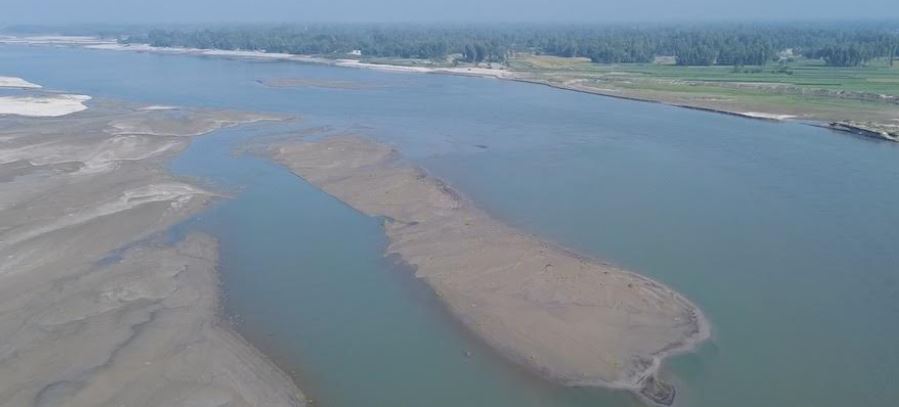
KURIGRAM, March 12, 2026 (BSS) - Dredging activities in the Dharla River, a
trans-boundary river long plagued by filling, navigability crises, and severe
erosion, are significantly improving the river's depth and reducing erosion,
providing much-needed relief to the local population living along its banks.
The Dharla River, which originates in Cooch Behar, India, flows into
Bangladesh and runs through several upazilas of Kurigram district, including
Patgram, Lalmonirhat, Phulbari, Sadar, and Ulipur.
This 60-kilometer-long river has been a major cause of concern due to
constant erosion and the shifting of its course, displacing thousands of
people over the years.
To address these challenges and restore the river's navigability, the
Bangladesh Inland Water Transport Authority (BIWTA) launched a project under
the title "Navigation Development and Restoration of Old Brahmaputra, Dharla,
Tulai, and Punarbhaba Rivers".
The dredging work, which began on December 14, 2023, spans a 25-kilometer
stretch from Pateshwari area in Kurigram Sadar to Kaliganj in Ulipur at an
estimated cost of Taka 263 crore 21 lakh.
According to BIWTA Executive Engineer Sameer Chandra Pal, dredging is being
carried out to a depth of 8.5 feet from the water level to restore
navigability.
The project, which is being executed in seven lots under two packages,
currently employs 14 cutter suction dredgers to remove soil and sand from the
riverbed. The target is to excavate 16 million cubic meters of soil, of which
13 million cubic meters have already been removed.
This excavated material is being used to strengthen flood control
embankments, fill khas land, low-lying areas, and regions prone to erosion.
Additionally, the dredged sand has been put to use for filling areas around
the proposed 30-acre DC Park near Dharla Bridge and other important community
spaces, including educational institutions and flood shelters.
The ongoing work is expected to conclude by June 30, 2027, with about 65
percent of the project already completed.
The positive impacts of these dredging activities are already visible,
particularly in coastal areas. Locals have reported that the water now
recedes faster during the monsoon season, and the risk of erosion has
significantly decreased compared to previous years.
Residents of the affected areas have expressed relief as the ongoing dredging
helps to restore both safety and agricultural productivity. Abdul Kader, a
resident of Pateshwari in Bhogdanga Union, shared that, "Earlier, we had to
stay up at night to guard our homes during the monsoon for fear of them being
washed away. Now, the river has calmed down, and we no longer fear erosion."
Similarly, Aminul Islam, a farmer from Sitajhar village in Mogalbasa Union,
said the land they lost to erosion is beginning to recover as the low-lying
areas are filled with dredged soil, making them suitable for farming once
again.
The positive effects are also being felt in flood-prone areas, such as Sarkar
Para in Buraburi Union, where residents are no longer concerned about
waterlogging during the rainy season.
The economic benefits of the dredging project are also notable. The excavated
soil and sand have been used for various community development works,
including the construction of infrastructure for educational and religious
institutions. Moreover, through the sale of dredged sand, the government has
already deposited Taka 1 crore 73 lakh 81 thousand 111 in the national
treasury.
BIWTA Additional Chief Engineer Saidur Rahman affirmed that the ongoing
dredging is already showing substantial benefits.
"The water is receding more quickly, and the risk of erosion has been almost
completely mitigated," he said, adding that the ministry plans to continue
the dredging activities throughout the entire Dharla River to further enhance
its benefits for the local population.
Locals remain hopeful that, with the successful completion of this project
and the planned expansion of dredging activities, millions of people living
along the Dharla River's banks will be permanently freed from the fear of
erosion and displacement.