News Flash
By Md Aynal Haque
RAJSHAHI, May 21, 2026 (BSS) - Birds say, “Trees are my safe shelter.” Earthworms say, “We keep the soil around trees fertile and sustain life.” The soil says, “Fallen leaves from trees make me fertile and give birth to new life.”
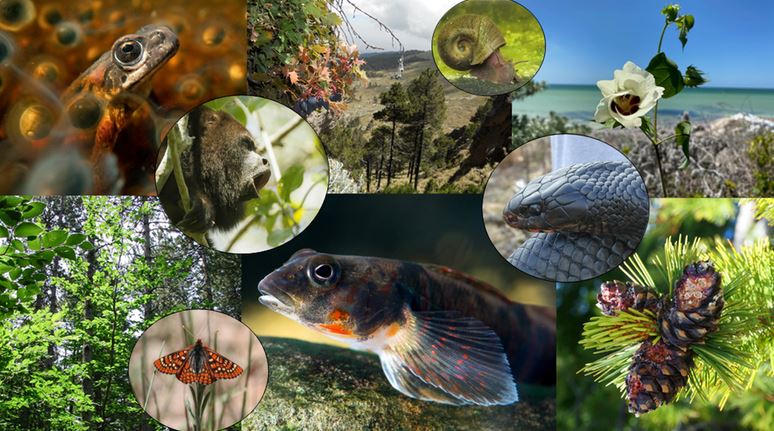
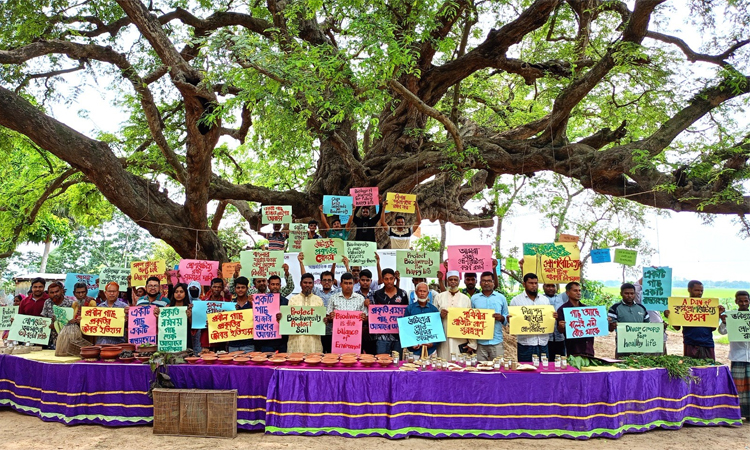
Marking International Day for Biological Diversity 2026, the Tanore Upazila Peoples' Organization Coordination Committee, Green Coalition, and Bangladesh Resource Centre for Indigenous Knowledge (BARCIK) organized the ‘Agro-biodiversity Festival’ today under a 350-year-old tamarind tree in Mohor village in Tanore Upazila of the district. The theme was “One Tree, One Ecosystem.”
The main objective of the event was to inspire people to rethink the interconnections in nature and highlight the importance of conserving native biodiversity and agro-ecology.
Billions of microorganisms live beneath the roots of a single tree, while its branches shelter birds, squirrels, bees, and various beneficial insects.
A tree is not just a tree — it is life, it is agriculture, it is the Earth. An ecosystem grows around an old tree.
The festival showcased 140 varieties of rice, vegetable, and wheat seeds; components of aquatic ecosystems like water lily, water chestnut, lotus, snails, oysters; indigenous eco-friendly fishing tools; 45 species of uncultivated leafy greens; water from various rivers of the Barind region; soil diversity of the Barind region; and eco-friendly stoves.
Through these exhibits, the relationships among all environmental elements were demonstrated.
Participating farmers also exchanged seeds with one another.
Conducted by BARCIK Program Officer Amrita Sarkar, the event featured Atiqur Rahman Atik, President of the Barind Youth Forum, who presented the concept paper of the festival and the significance of International Day for Biological Diversity.
He said, “Biodiversity is not just about animals or forests; it is the foundation of food, water, health, agriculture, economy, and culture. Respecting, protecting, and restoring our biological resources is now the most important responsibility of our time.”
Farmers, teachers, students, and members of youth organizations from 10 villages of Tanore Upazila participated in the event. Speakers discussed initiatives taken to conserve biodiversity.
Md. Zaidur Rahman, 55, a farmer from Duboil village and President of the Barind Seed Bank, said: “To preserve native rice diversity, I cultivate 170 varieties of rice every year during the Aus, Aman, and Roro seasons. If these rice varieties are lost, our history, heritage, and the rural cultural Nabanna festival will also be lost.”
Setara Begum, 46, a farmer from Jagadishpur village, said: “I grow chemical-free vegetables. I do not use any chemical fertilizers. I use organic pesticides. I preserve various types of seeds at home, and people from the area take seeds from me.”
She added, “Uncultivated leafy greens used to be found everywhere around homes, but now they are no longer available. I cultivate 30 species of uncultivated greens at my home. I grow chemical-free vegetables and eat chemical-free food.”
Monica Tudu, 45, an indigenous farmer from Mondumala village, said: “Many edible snails, oysters, and aquatic animals that were part of our food and culture have disappeared. Through this, aquatic biodiversity will survive.”
Nur Mohammad, 65, a self-taught agricultural scientist from Gollapara village, said: “We must conserve biodiversity for the future. Pesticides cannot be applied indiscriminately on crop land.”
He added, “Due to crop cultivation and excessive use of pesticides and chemical fertilizers near Bill Kumari, known as a biodiversity reservoir in Tanore Upazila, many fish species and aquatic life have gone extinct.”