News Flash
By Mutaher Hussain
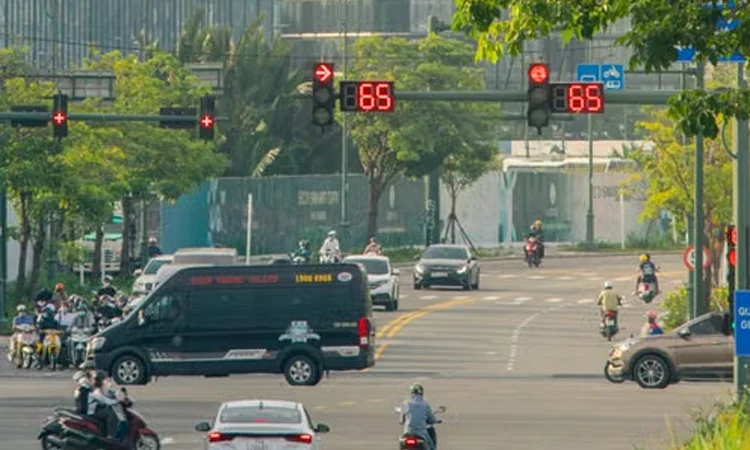
DHAKA, July 21, 2026 (BSS) - The Dhaka Metropolitan Police (DMP) is planning to introduce semi-
automatic traffic signal systems at 120 major intersections across the capital within the next
six months as part of a broader technology-driven initiative to improve traffic management and
reduce congestion.
DMP Additional Commissioner (Traffic) Anisur Rahman disclosed the plan in a recent interview with
Bangladesh Sangbad Sangstha (BSS), saying that semi-automatic signals are already operational at
12 intersections and the number is expected to exceed 60 within the next month.
"We are gradually introducing semi-automatic traffic signals across the capital. At present, the
system is functioning at 12 points, and within the next month it will expand to more than 60. Our
target is to bring the city's 120 key intersections under this system within the next six
months," Rahman said.
He said the new signals can be manually adjusted when necessary, allowing traffic personnel to
modify signal timings based on real-time road conditions.
In the long term, however, the DMP aims to establish a fully automated, algorithm-based traffic
management system similar to those used in developed countries.
"In advanced countries, traffic signals are interconnected and managed through algorithms that
automatically determine signal timings based on vehicle flow. Bangladesh's road network was not
originally designed to support such a system, so we are introducing a semi-automatic system as a
practical solution before moving toward full automation," he said.
Rahman also said the DMP has implemented traffic diversions and engineering modifications at 75
locations across the capital over the past year despite operating with limited manpower.
"Rather than simply increasing the number of traffic personnel, scientific road design,
diversions and engineering modifications have proved to be more effective in reducing congestion.
We have not received reports of any major new traffic problems following these changes, while
field-level feedback has been encouraging," he added.
According to the DMP traffic chief, around 4,100 personnel are assigned to the traffic division,
although only about 3,600 to 3,700 remain on active duty daily due to leave, training and
illness.
They manage traffic at 668 points across the capital, with around 25 major intersections
operating on a 24-hour, three-shift basis.
He cited the intersection near Asad Gate on Manik Mia Avenue as a successful example, where
redesigning vehicle movement by introducing a left turn and U-turn arrangement has significantly
improved traffic flow while reducing the need for traffic personnel.
Rahman said the DMP also plans to introduce GPS-based traffic monitoring and other smart
technologies to modernize traffic management in the future.
He acknowledged that heavy rainfall, road blockades, demonstrations, VIP movements and
uncoordinated utility work continue to disrupt traffic across the city.
"Traffic congestion cannot be solved by the traffic police alone. Effective coordination among
all relevant agencies and responsible road use by the public are equally important. Development
works should be carried out in coordination with the traffic department to avoid unnecessary
disruption," he said.