News Flash
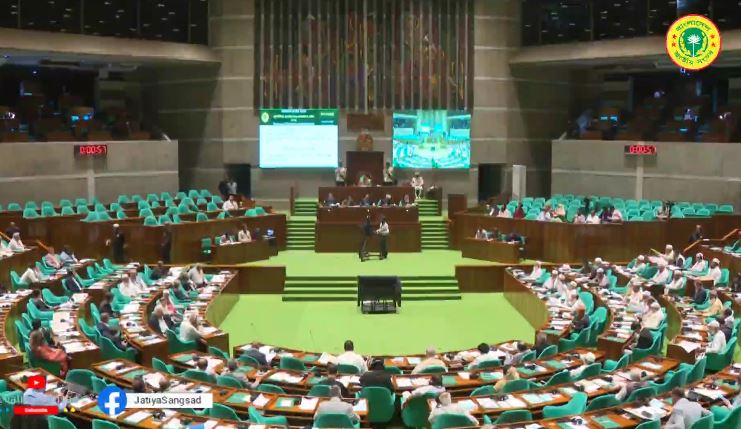
SANGSAD BHABAN, April 2, 2026 (BSS) - Out of the 133 ordinances issued during the interim government, the special committee of the Jatiya Sangsad has recommended that 98 ordinances be passed in their entirety and 15 ordinances be introduced in the House through the relevant ministry in amended forms.
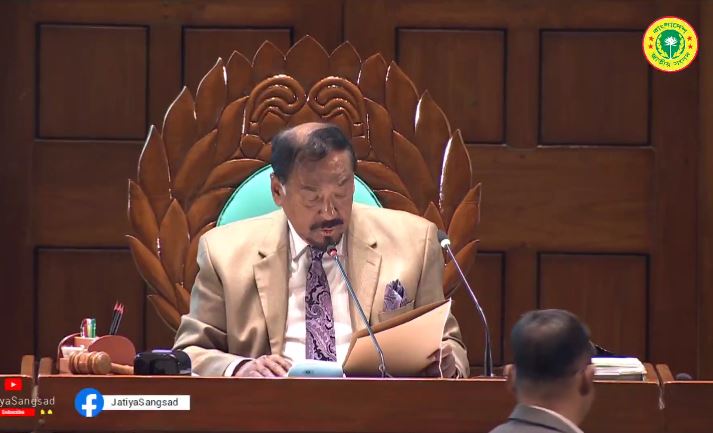
Special Committee Chairman Zainul Abedin (Barishal-3) placed the report on the ordinances in the Parliament today.
Earlier on March 12, the 133 ordinances issued during the interim government's tenure were presented in the first meeting of the 13th Jatiya Sangsad as per the rules.
Later, the parliament formed a 13-member special committee comprising treasury and opposition bench members to examine them and submit a report. The committee submitted its report today.
Out of the remaining 20 ordinances, 16 ordinances should not be introduced in the parliament as bills now, but should be further strengthened and revised later. It has been recommended that a bill be introduced in the parliament now for the repeal and preservation of four ordinances.
That is, 20 ordinances issued during the interim government are not being approved by the parliament at this moment.
As a result, their effectiveness will lapse after the specified period. The constitution states that if an ordinance is not approved within 30 days of its introduction in the parliament, its effectiveness will lapse.
Some 20 ordinances issued during the interim government's tenure, including the Anti-Corruption Commission Ordinance, the National Human Rights Commission Ordinance, the Police Commission Ordinance, the Prevention and Remedies of Disappearances, and the Referendum Ordinance, did not get approval from the Special Committee recommendation to get legal status in the current session.
Of these, four ordinances, including the Supreme Court Judge Appointment and the Supreme Court Secretariat Ordinance, have been recommended to be repealed.
In the case of the remaining 16 ordinances, it has been recommended to submit a new bill in the parliament instead of presenting it in the form of a bill now, but to examine and select it later and further strengthen it.
Of these, three members of the opposition party Jamaat-e-Islami gave ‘notes of dissent’ to the special committee regarding a total of 20 ordinances.
It has been recommended to bring bills for repeal and custody in the case of four ordinances. Which include— Jatiya Sangsad Secretariat (Interim Special Provisions) Ordinance, 2024, Supreme Court Judges Appointment Ordinance, 2025, Supreme Court Secretariat Ordinance, 2025 and Supreme Court Secretariat (Amendment) Ordinance, 2026.
The report said that out of the 133 ordinances, 16 ordinances were not proposed in the parliament as bills now, but were recommended to be further strengthened and presented as new bills after scrutiny and selection. Out of which, the opposition party gave a ‘note of dissent’ (objection) to 11.
The 16 ordinances include the National Human Rights Commission (Amendment) Ordinance, 2024, Revenue Policy and Revenue Management Ordinance, 2025, Revenue Policy and Revenue Management (Amendment) Ordinance, 2025, National Human Rights Commission Ordinance, 2025, Referendum Ordinance, 2025, Prevention and Remedy of Disappearances Ordinance, 2025, National Human Rights Commission (Amendment) Ordinance, 2025, Anti-Corruption Commission (Amendment) Ordinance, 2025, Prevention and Remedy of Disappearances (Amendment) Ordinance, 2026, Microfinance Bank Ordinance, 2026, Right to Information (Amendment) Ordinance, 2026.
The ordinances that the opposition party did not object to are—Value Added Tax and Supplementary Duty (Second Amendment) Ordinance, 2025, Customs (Amendment) Ordinance, 2025, Income Tax (Amendment) Ordinance, 2025, Civil Aviation (Amendment) Ordinance, 2026, Bangladesh Travel Agency (Registration and Regulation) Amendment Ordinance, 2026.
Among the ordinances that have been recommended for passing in full, there are some ordinances of local government institutions.
Apart from this, there are the Bangladesh Bank Amendment Ordinance 2024, the Bangladesh Energy Regulatory Commission (Amendment) Ordinance, the Special Security Forces (Amendment) Ordinance, the Security of Family Members of the Father of the Nation (Repeal) Ordinance, and the Certain Laws (Amendment) Ordinance relating to Universities (change of names like Bangabandhu, Bangamata, Sheikh Hasina, etc. mentioned in the laws of various universities), Grameen Bank (Amendment) Ordinance, International Crimes (Tribunals) (Second Amendment), Jatiya Sangsad Delimitation (Amendment) Ordinance, Cyber Security Ordinance, Government Service (Amendment) Ordinance, July Uprising Martyrs' Families and July Fighters Welfare and Rehabilitation Ordinance, July Uprising Memorial Museum Ordinance, July Uprising (Protection and Determination of Liability) Ordinance. There are many laws that are related to name change.
Some 15 ordinances have been recommended to be brought up in amended form. However, the special committee report did not mention where and what amendments will be brought.
These are the Women and Children's Repression (Amendment) Ordinance of 2025, the Public Procurement (Amendment) Ordinance, the Bank Resolution Ordinance, the Anti-Terrorism Ordinance, the Code of Criminal Procedure (Second Amendment), the National Data Management Ordinance, the Bangladesh Labor (Amendment) Ordinance, the Human Organ Transplantation Ordinance, the Police Commission Ordinance, the Smoking and Tobacco Products (Control) (Amendment) Ordinance, the Prevention and Suppression of Human Trafficking and Migrant Smuggling Ordinance of 2026, the Land Use Control and Agricultural Land Protection Ordinance, the Bangladesh Telecommunication Regulation (Amendment) Ordinance, the Non-Government Educational Institution Teachers and Employees Retirement Benefits (Amendment) Ordinance, and the Non-Government Educational Institution Teachers and Employees Welfare Trust (Amendment) Ordinance.