News Flash
DHAKA, May 27, 2026 (BSS) - The BNP-led government has started making a visible impact on public life and society by taking up 200 initiatives and projects in its first 100 days and implementing those.
As a result, the government has brought a message of optimism and positive change to the nation.
This information has been revealed in an e-book published by the Prime Minister's Office this morning, highlighting the significant achievements of the government, the activities of various ministries and the initiatives taken by the government.
The e-book published by the Prime Minister's Press Wing will be updated regularly with time.
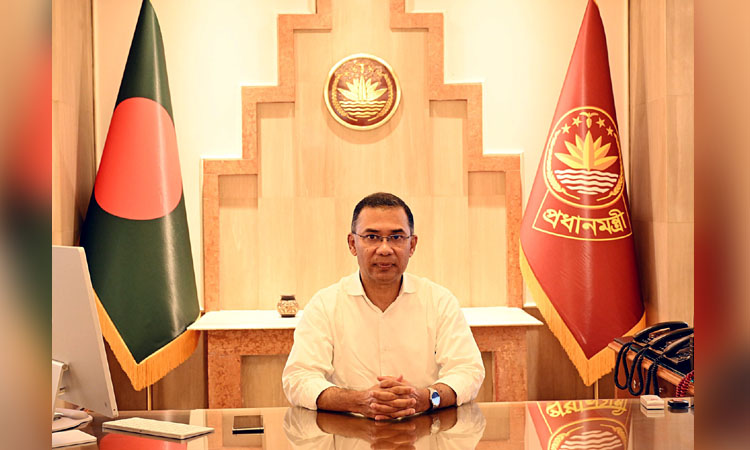
The published e-book says the first 100 days of the Tarique Rahman-led government, after the 13th National Parliament elections, were mainly a time of direction setting, administrative restructuring and rebuilding public trust.
Amid economic pressures, global instability, energy crisis, employment constraints and long-standing institutional weaknesses, the government has quickly taken some policy and people-oriented initiatives.
The e-book says, "During this period, the government's activities have gained more importance on social and economic assistance that directly affects the lives of the common people, digital and structural reforms in the administrative and judicial systems, and long-term economic and infrastructural plans."
Among those, Family Card, Farmer's Card, Agricultural Loan Waiver, Sports Card, E-Health Card, Digital Land Service, E-Bail Bond, Canal Re-excavation, Financial Honorarium for Imam-Muezzins and other religious leaders, renewable energy and new programmes for Education and Youth were the much-discussed initiatives.
At the same time, some of Prime Minister Tarique Rahman's personal and administrative decisions, such as limiting state protocols, reducing government expenditure, instructions to quickly resolve field-level problems, and direct involvement with the common people, have given a different dimension to the government's political message.
The e-book also says price control, energy security, investment growth, employment expansion, and implementation of long-term reforms are still big challenges. Nevertheless, the government has tried to indicate an active, quick-decision-making, and people-oriented administration in the first 100 days.
Although many initiatives are still at the initial implementation stage, the government has brought forward a commitment to make the state more technology-based, accountable, and service-oriented.
According to the Prime Minister's Press Wing, promises made on the election platform are usually part of political speeches, but after coming to power, leadership is evaluated only by transforming those promises into a real action plan. In the new political reality of Bangladesh, Prime Minister Tarique Rahman's election pledges and his direct political instructions and steps for quick implementation are now a matter of national discussion.
"Since assuming office on February 17 last, his government has faced multiple challenges such as global economic pressures, foreign exchange reserve crisis, investment stagnation, employment shortage and administrative weaknesses."
In the first 100 days, the speed of policymaking, indications of stability in economic management, discipline in administrative activities and positive trends in investment and employment recovery have become evident.
This is the first time that a government in Bangladesh has started implementing election promises across the country immediately after assuming office. Because, this government believes that working for the welfare of the underprivileged people of the country is the main responsibility of elected representatives, according to the e-book.