News Flash
By Mohammed Shah Nowaz
CHATTOGRAM, May 29, 2026 (BSS) - Zia Memorial Museum (ZMM) has been considered as a far impacting political and ideological legacy that reflects and depicts memories of Shaheed President Ziaur Rahman and 71 Liberation War.
Many of its historically invaluable artifacts and blood stained objects of Shaheed Zia -- prominent as whistle blower of the country’s Liberation War -- are gaining heavy dust as well as got derelict that poses a threat to their damage.
The ZMM can be turned into a school of political thoughts and a center for ideological inspiration for the followers, admirers and disciples of Shaheed President Ziaur Rahman when one can have a glimpse of those brief notes of his speech before the political leaders and civil society members and the 19-point charter which is believed to be fundamentals of Bangladesh Nationalist Party (BNP).
A conscious citizen or a curious political worker can learn a lot and have a food for thoughts when he evaluate the unthinkably simple menu for meals of a President that being hang on the wall, his own hand-writing short notes on his political philosophy and views on various perspectives being displayed inside the different sections of the museum.
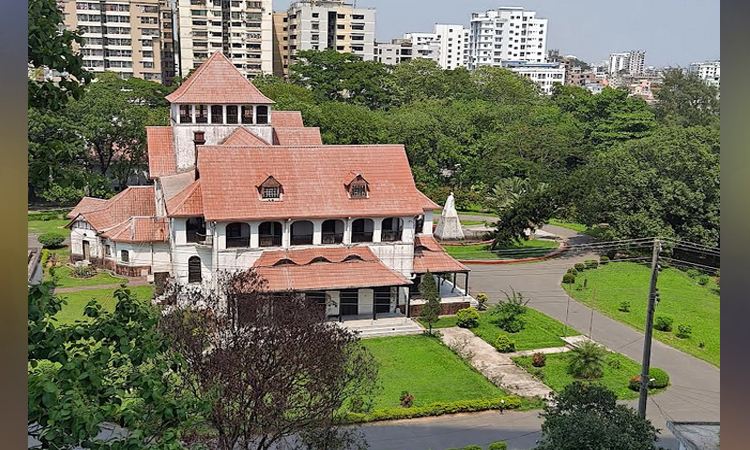
The museum that was named after proclaimer of the country’s Independence and still considered as most popular head of the state in the country’s more than half a century history, is located at Stadium-Kazir Dewri area - a center-point of the port city encircled by the surrounding kaleidoscopic greenery.
The structure covering 3.17 acers of land was built during British rule in 1913 symbolizing South-East Asian Pagoda style architectural design and at the same time keeping similarity with local multi-tier roof tin-shed house.
Pakistani occupation forces had set up camp there during Liberation War and used it as ‘torture cell’ where Pakistan army dragged on and killed innocent Bengalis and Freedom Fighters. In that point of view, the structure stands as a silent witness of the country’s War of Independence.
The old circuit house later was turned into a museum where Shaheed President Zia was brutally assassinated in the dead night of May 30 in 1981 by a group of disgruntled army personnel as a part of an orchestrated conspiracy.
The building is itself a historic infrastructure for its architectural and structural construction. A cabinet meeting held on June 3, 1981 took decision to set up a museum there after the name of Liberation War hero Shaheed President Ziaur Rahman.
Begum Khaleda Zia after coming to power in 1991 general election following ouster of General Ershad regime in a decade long fight, formally inaugurated the artifact as “Zia Srithi Jadughar” on September 6, 1993.
“Only political philosophy is not enough- it must lead a socio-economic program”, “B Nat got to be outward looking”, “Party is people’s based”, “We should not bluff people anymore to execute the party program”- those are the key policy points among his handwritten notes while addressing the leaders and civil society members to inspire and manifest his core political ideas based on Bangladeshi Nationalism and self-reliant economy through ushering agriculture revolution.
One become stunned when see the really short and simple lunch menu of a President where state rulers and VIPs had negative reputation of voraciousness and wasting public money.
Zia’s personal staff sent the written menu for the President during his daylong stay at circuit house for his May 29-30,1981visit.
As per fixed menu, the lunch menu included tea with milk and sugar, bread, butter, fried fish and chips, roast chicken and vegetable, fruit cocktail and lemon while the dinner menu was plain rice, chicken soup, pudding, chicken curry, mutton dopeaja, dal and salad. The afternoon snacks included tea (Ispahani) with sugar and milk, biscuit (salted, Haque) and lemon.
The museum is not only contains the memories of Zia, also displays important objects of Liberation War totaling 876 artifacts like diorama of microphone and table of Kalurghat Radio Transmitting Center from where Major Zia declared War of Independence, painting of seven Bir Shresthas and Sector Commanders, old model rifles used in Liberation War by Freedom Fighters, diorama of inauguration of Post Office at Roumari under Kurigram by Major Zia commemorating the first free area in 1971, surrendering ceremony at the then Racecourse Maidan by Pakistan Army on December 16, 1971, Letter Pad, Envelop of Z Force, Symbol and Monogram of Muktijoddah Sangsad and military uniform of Zia.
“ZMM is not only the biggest museum in Chattogram region, it’s also a center for education, culture, heritage and research” said an official.
But not only the many historically worthy objects those were preserved for display inside the museum, the main structure of the facility is in a very dilapidated state due to sheer negligence out of political vengeance and lack of proper initiatives to preserve the establishment.
“Preservation and proper maintenance were never a priority task for erstwhile regime and that’s why the museum is now in a shamble state. An influential quarter of the fallen government had been trying to vanish it in a bid to delete the memories of Shaheed President Ziaur Rahman, a museum staff preferred to be anonymous told BSS.
During a recent visit at the museum, it was seen that the plaster on the wall and roof of ground floor and 2nd floor were peeling off extensively, wooden stairs, windows and many other crucial junctions inside and outside the museum have been under verge of damage.
A number of invaluable artifacts like gold and metal medals, the heavy equipment of historic Kalurghat Radio Transmitting center from where the then Major Zia declared country’s Independence twice in uncertain turmoiled days of March in 1971, the furniture and fixers in the VIP room which Zia used on that fateful night, the blood stained jute mat of the room and the stretcher by which the body of the Shaheed President was brought to Dhaka from his first grave at a hilly slope of Rangunia upazila and replicas of his famous stylist sitting pose at canal excavation site and symbolic sitting style with military uniform while proclaiming the Independence from Kalurghat Radio Transmitting Station which were preserved inside ground floor and 2nd floor of the museum have been gaining heavy dust.
Some items became discolored and faded away while some gathered rust. The main walls at some points got visible cracks.
Finance and Planning Minister Amir Khosru Mahmud Chowdhury while visiting the Museum on March 20 last disclosed the government’s initiative to declare it as heritage site for preserving and protecting the memories of both Shaheed President Zia and country’s War of Liberation in 197.
He stressed on beginning necessary repair and maintenance work immediately, saying- despite its beauty and historical significance, the lack of maintenance and negligence have made the establishment vulnerable with high risk to collapse in any moderate or intense earthquake.
The museum is intertwined with the memories of Shaheed President Ziaur Rahman and the history of the Liberation War, he said adding, “The museum is not just a building but holds significance in the country's history and people's emotions.”
Cultural Affairs Minister Nitai Roy Chowdhury also visited ZMM on March 24 last and saw the present condition of the establishment while he attended a function at it’s auditorium on the occasion of Independence Day.
A portion of wall attached to 2nd floor stair collapsed during the earthquake on December 2 last year, and the museum authority following an order from Director General of Bangladesh National Museum kept it closed for visitors considering their safety.
Administrator of the ZMM Arpita Das Gupta said necessary repair and renovation work of the ZMM under an special allocation of Taka 1.87 crore which started from February 2 last still is going on. It’s expected to be completed in June.
The work includes maintaining the scraps, painting of the boundary walls and main structure, lighting inside and front garden, installation of new dioramas and renovation of rest house.
“Historical importance of the museum is enormous and has huge people’s emotional attachments. So, it needs bigger attention of the higher authorities for the sake of preserving the heritage and keep the century old structure and invaluable artifacts protected inside it as exact it was,” she said.
Terming the century old structure as “memorial emblem of the history” Director General of Bangladesh National Museum Tanzim Ibne Wahab told BSS that they have taken a 3-phases long-term plan to preserve the ZMM properly keeping it’s original character intact.
On the first phase, authorities will declare the structure as a heritage site soon and secondly draw a project for its retrofitting and full-length restoration with the support of experts from home and abroad.
“We have already started discussion with renowned experts in this regard and in no way we will allow erase or elimination of any artifacts or any damage to such a worthy establishment closely link to our national history,” he said.
Authorities is considering to open a portion of the now closed museum after completion of ongoing repair and renovation work keeping in mind the curiosity and attraction of visitors, he said.