News Flash
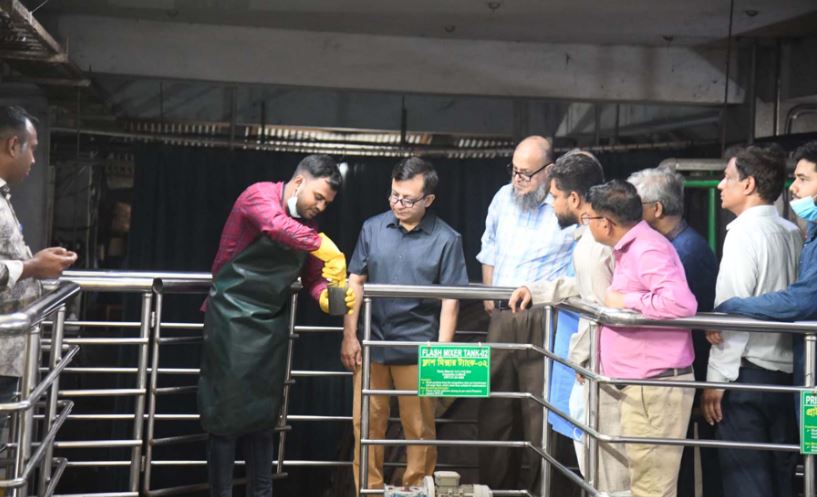
DHAKA, May 29, 2026 (BSS) – Commerce, Industries, and Textiles and Jute Minister Khandakar Abdul Muktadir today said the government aims to transform the country’s leather sector into a stronger and more export-oriented industry through maximum utilization of sacrificial animal hides.
He said a comprehensive and long-term plan for the development, preservation, processing, and enhancement of export capacity of the leather sector would be unveiled before the nation by July.
The minister made the remarks while talking to reporters after visiting rawhide trading activities at Posta in the capital’s Lalbagh area this afternoon.
Muktadir said the government remains hopeful that most sacrificial hides this year would be collected in usable condition due to coordinated initiatives by the government, active participation of traders and warehouse operators, and preservation efforts undertaken through mosques and madrasas, said a ministry press release.
“During visits to Aminbazar yesterday and Posta and Hemayetpur trading centres in Savar today, I observed a large volume of hides in traders’ possession, with salting activities underway,” he said.
He noted that sacrificial hides do not arrive in Dhaka all at once, and the overall process normally takes two to three months to complete.
However, through coordinated efforts by different government agencies, district administrations, city corporations, the Bangladesh Small and Cottage Industries Corporation (BSCIC), and relevant traders, the government expects to achieve its desired goals this year.
Highlighting the importance of proper preservation, the minister said current weather conditions remain comparatively favourable, but hides condition may deteriorate within hours if temperatures rise to 38 to 40 degrees Celsius.
“If hides are properly cleaned and salted within four to six hours after sacrifice, they can be preserved for up to three to four months,” he added.
Explaining the leather processing chain, Muktadir said traders purchase rawhides for industrial processing, beginning with wet blue leather, followed by crust leather and finally finished leather, which is later used in producing shoes, sandals, belts, and other products.
“If salt is not applied on time, the hide loses all practical value,” he said.
Replying to a question regarding smuggling, the minister said allegations of hide smuggling emerge every year, but the government does not want a single hide to be smuggled out of the country.
“The relevant authorities have been instructed to maintain strict vigilance to this end,” he added.
Referring to the Savar leather industrial estate and the Central Effluent Treatment Plant (CETP), he said many tanneries have yet to become fully operational following relocation from Hazaribagh, while the CETP still faces some limitations.
“These constraints will be addressed to attract further investment and bring the entire leather industry under full industrialisation,” he said.
The minister said the CETP has a project capacity of processing 25,000 cubic metres daily, although actual treatment currently ranges between 14,000 and 18,000 cubic metres. “Necessary reforms and expansion measures would be undertaken to enhance capacity,” he added.
He also stressed the need to modernise slaughtering and skinning processes to improve leather quality. “Removing hides from animals requires skill. Improper skinning damages quality. We are planning to modernise and mechanise the entire process,” he said.
Muktadir said the country’s leather goods market and exports are currently valued at around Tk 12,000 crore to Tk 15,000 crore, while there is also a significant domestic market for leather products.
The minister said the government has already distributed salt free of cost to madrasas and collection centres through BSCIC and district administrations to ensure proper preservation and industrial use of sacrificial hides.
Industries Secretary Md Obaidur Rahman, Commerce Ministry Secretary (Routine Charge) Md Abdur Rahim Khan, BSCIC Director General Md Saiful Islam, and leaders of the Bangladesh Tanners Association were present on the occasion.