News Flash
NAOGAON, June 21, 2026 (BSS) - A new export opportunity is emerging for
Bangladesh's mango industry as Japanese importers have expressed strong
interest in sourcing mangoes from Naogaon, one of the country's leading
mango-producing districts.
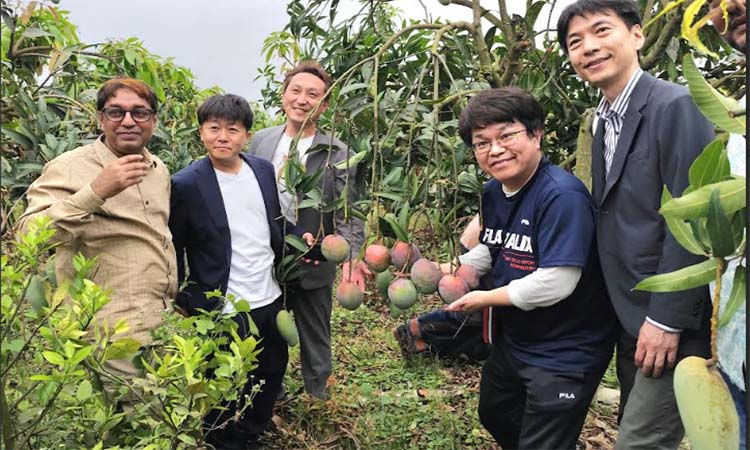
A delegation of Japanese importers and traders recently visited an export-
oriented mango orchard in the Bandhupara area of Porsha upazila to assess the
quality and export potential of locally produced mangoes.
Following the visit, the delegation expressed satisfaction with the
district's safe and sustainable mango production practices and indicated
their willingness to import significant quantities of mangoes from
Bangladesh.
Kawamtu, a member of the Japanese business delegation, said Japan has a
growing demand for quality mangoes and that the team visited Rajshahi and
Naogaon at the invitation of the Japanese Embassy in Dhaka to inspect
exportable orchards.
"We are currently reviewing various stages of mango import from Bangladesh.
If everything proceeds smoothly, Japan will purchase a substantial amount of
mangoes from the country," he said.
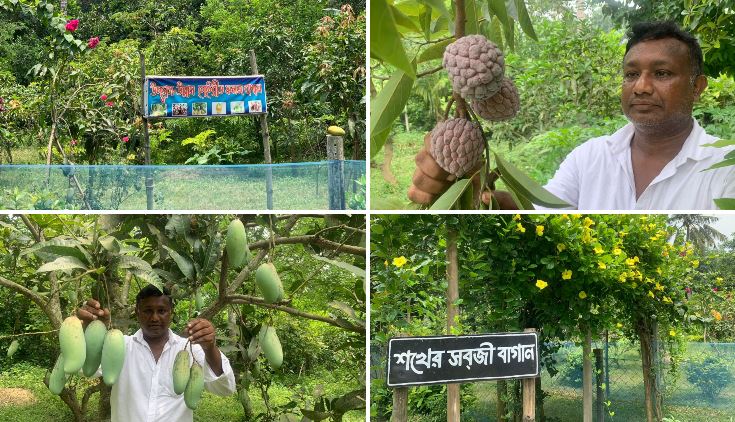
The delegation visited the Fruits Museum Agro Farm, a 50-bigha orchard in
Bandhupara that follows Good Agricultural Practices (GAP). During the
inspection, the visitors examined several mango varieties, including
Amrapali, Bari-4, Katimon and Banana Mango and learned about cultivation
techniques and food safety measures.
"We have heard that Naogaon's mangoes are exceptionally sweet and delicious.
We came here to verify their export potential and are impressed by the GAP-
based cultivation methods. We hope to bring these safe and high-quality
mangoes to the Japanese market," Kawamtu added.
Other members of the delegation included Japanese businessmen Sakakibara,
Ishimoto and Shigimori. Bangladeshi mango exporter Abu Sayeed accompanied the
team during the visit.
Before arriving in Naogaon, the delegation also inspected exportable mango
orchards as well as grading, sorting and cleaning facilities in Rajshahi and
Chapainawabganj. The visitors reportedly expressed positive views regarding
Bangladesh's mango export capabilities.
The prospect of entering the Japanese market has generated optimism among
local farmers and entrepreneurs, who believe it could significantly expand
export opportunities and increase returns for growers.
Raihan Siddique, owner of Fruits Museum Agro Farm and a recipient of the
government's Good Agricultural Practices certification for safe food
production, briefed the delegation on the orchard's production methods and
mango varieties.
He said that mangoes from Naogaon have already been exported to several
European and Middle Eastern countries, while exports to China began last
year.
"This year, for the first time, there is a strong possibility of exporting
Bangladeshi mangoes to Japan. Such an achievement would greatly benefit mango
farmers in Naogaon," he said.
Local mango farmer Salauddin welcomed the development, saying direct exports
to Japan would help farmers secure fair prices without relying on
intermediaries.
Porsha Upazila Deputy Assistant Agriculture Officer Selim Reza said the
Japanese delegation visited the orchard under the guidance of the Japanese
Ambassador in Dhaka to observe safe mango production practices following GAP
standards.
"The delegation was satisfied after inspecting the orchard and learning about
the production process," he said.
According to the Department of Agricultural Extension, Naogaon has set a
target of producing 386,000 metric tonnes of mangoes this season from
approximately 30,500 hectares of orchards across the district.
The potential export of Naogaon mangoes to Japan is being viewed as a
significant milestone that could open a promising new chapter for
Bangladesh's fruit export sector.