News Flash
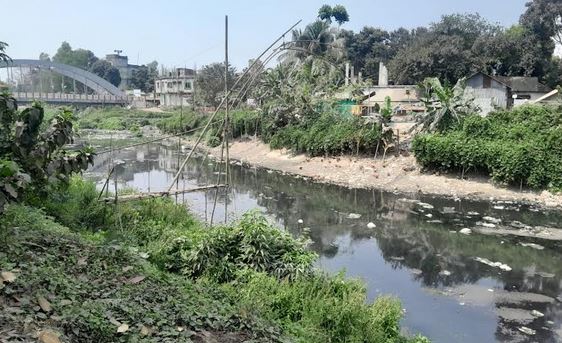
TANGAIL, April 16, 2026 (BSS) - A severe environmental crisis is unfolding in Tangail town, where 27 canals are now on the verge of extinction due to widespread encroachment, unplanned development, pollution and prolonged neglect.
Historically connected to the Louhajang River, these canals once played a vital role in maintaining the town's natural drainage and ecological balance. Over time, however, illegal occupation and infrastructural changes have drastically altered this network.
Several canals have already disappeared, while others have been converted into drains by the Tangail Municipality, with some areas even developed into marketplaces.
Environmentalists warn that the Louhajang River itself has become nearly lifeless due to encroachment and pollution. Experts stress that restoring the river's natural flow through re-excavation and removing illegal structures is essential for reviving the canal system.
The situation is particularly alarming in the case of Shyamababu Canal, which runs through the heart of the town. Once a functional waterway, it has now turned into a garbage dumping site, emitting foul odors and posing health risks to residents. Pedestrians are often forced to cover their noses while passing through the area.
According to research by environmental organizations, including the Bangladesh Environmental Lawyers Association (BELA), 27 canals were identified across 14 wards of Tangail Municipality. Notably, four wards-10, 12, 13, and 16-no longer have any visible canals.
The study, based on government land records, highlights extensive encroachment by influential groups who have filled canals with waste and constructed buildings over them.
The degradation of these water bodies has disrupted the town's natural drainage system, increasing the risk of waterlogging and environmental hazards. Experts also warn of rising health issues, including respiratory diseases, due to dust and pollution caused by degraded waterways.
Historically, Tangail's canal network was a lifeline for both transportation and sanitation. In 1905, Shyamacharan Gupta, then vice chairman of the municipal council, initiated the excavation of a major canal to improve drainage and communication. Even after independence, boats regularly navigated these waterways.
However, in the 1990s, construction projects-such as sluice gates under the Compartmentalization Pilot Project-led to sediment buildup at the river's source, reducing water flow and accelerating the decline of both the river and its connected canals.
Local residents recall a 2016 initiative by the district administration to reclaim encroached land along the Louhajang. Although some illegal structures were removed, the drive was later halted without clear explanation.
Environmentalists and civil society groups are now urging immediate action to restore the canals. Proposals include re-excavating major waterways like the Gaijabari Canal, which could help mitigate environmental risks for southern Tangail if restored.
Authorities have acknowledged the issue. Tangail Municipality officials stated that steps would be taken to prevent further encroachment, while the Water Development Board has already initiated tender processes worth approximately Taka 47.95 crore for river restoration and excavation works.
Despite these developments, experts caution that delays in implementation could lead to irreversible environmental damage. Immediate and coordinated efforts are essential to preserve Tangail's remaining waterways and protect the city from a looming ecological disaster.