News Flash

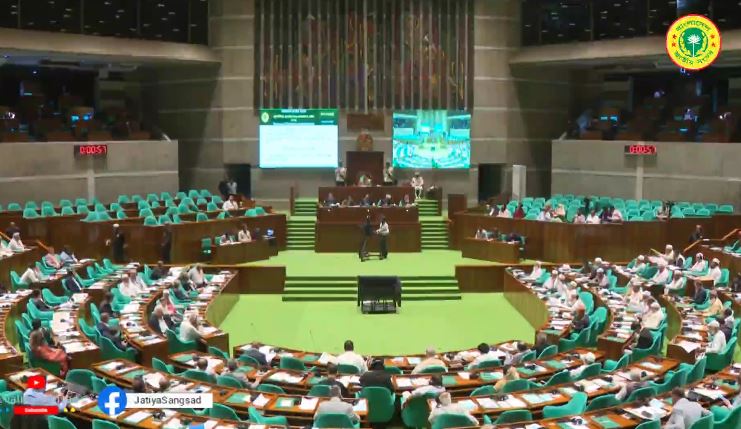
SANGSAD BHABAN, April 6, 2026 (BSS) - The government today placed a bill in the parliament aimed at safeguarding the country’s shrinking cultivable land and thus ensuring long-term food security for the country’s growing population.
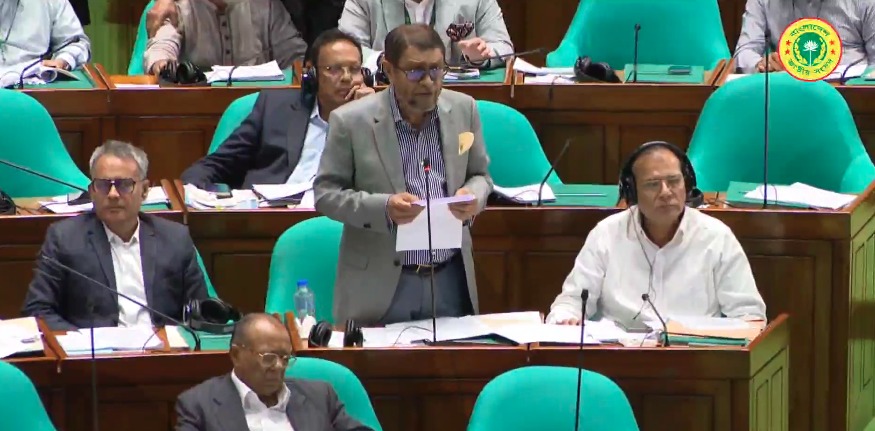
Land Minister Md. Mizanur Rahman Minu placed the bill in the House to curb unplanned urbanization, industrialization, and infrastructure projects that have led to the continuous depletion of agricultural plots.
Tobacco cultivation, which disrupts food security, as per the bill should not be allowed on agricultural lands with three or more crops, and tobacco cultivation should be gradually limited on agricultural lands with one and two crops.
Titled the Land Use Control and Agricultural Land Protection Bill, 2026, the proposed legislation seeks to regulate land use across the country in response to rapid urbanisation, industrial expansion, infrastructure development, and population growth that have been steadily reducing cultivable land.
The bill notes that unplanned land conversion has led to a continuous decline in agricultural land, posing risks to food security for present and future generations.
It proposes a structured, zone-based land management system to preserve farmland and ensure its optimal use based on ecological and geographical characteristics.
Under the proposed law, all land in Bangladesh, except the three hill districts of Rangamati, Bandarban and Khagrachhari, will be brought under a comprehensive zoning framework to be prepared by the government.
A key feature of the bill is the introduction of a land use zoning map, which will be developed using modern digital technology, satellite imagery and field-level verification.
The zoning process will classify land based on its current use, topography and environmental features, and may be implemented nationwide at once or in phases.
The government will publish a draft zoning map and allow citizens to submit objections or opinions within 30 working days.
District-level committees led by deputy commissioners will review these submissions and make decisions, with provisions for appeal to the government. The zoning map will be updated every 10 years.
The bill places strong restrictions on the use of fertile agricultural land, particularly two-crop, three-crop and multi-crop lands, as well as areas declared as special agricultural zones for high-value or high-yield production.
These lands cannot be used for non-agricultural purposes, except in limited cases of national necessity such as energy or mineral extraction, subject to strict conditions.
The proposed law sets a ceiling, allowing no more than 10 percent of total agricultural land to be used for non-agricultural purposes.
The legislation also includes strict measures to prevent environmental degradation.
It prohibits the removal of topsoil from agricultural land for brick kilns and bans the filling of water bodies and wetlands. It also restricts hill cutting and activities that damage forests.
Any violation, including construction of housing projects, resorts or industrial establishments on protected land, will be treated as a punishable offence.
Offenders may also be required to restore the land to its original condition in addition to facing legal penalties.
All government and private development projects will be required to comply with the law, ensuring that no project harms agricultural land or environmentally sensitive areas.
District administrations will be responsible for preparing lists of agricultural and ecologically critical lands, preventing illegal land conversion, regulating soil use for brick kilns, and taking corrective actions such as removal of illegal structures and restoration of land.
Violations of the law, including unauthorized land use change and illegal construction, will be punishable with imprisonment, fines or both. Some offences may carry penalties of up to two years’ imprisonment or fines of up to Taka two lakh.
Cases under the law will be tried by judicial magistrates, and provisions have been included to enable enforcement through mobile courts.
The bill also proposes repealing the Land Use Control and Agricultural Land Protection Ordinance, 2026, while retaining actions already taken under it.
If passed, the law is expected to introduce a more structured and science-based approach to land management in Bangladesh, balancing development needs with environmental protection and agricultural sustainability.