News Flash
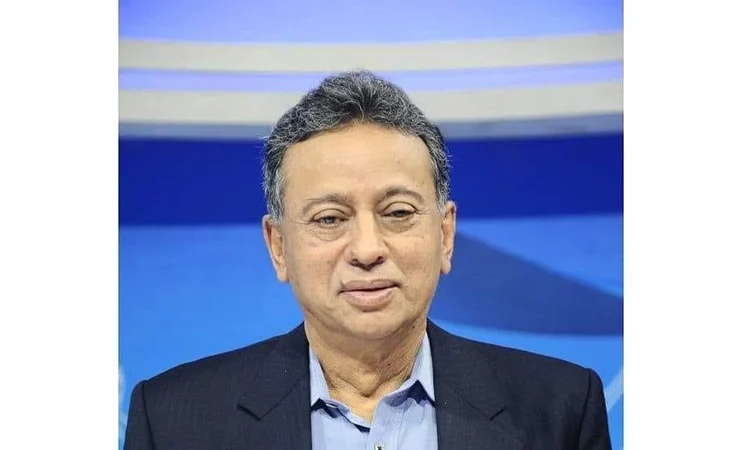
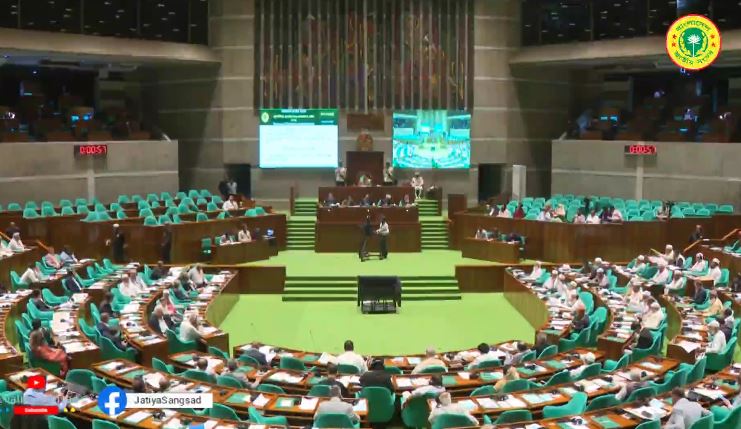
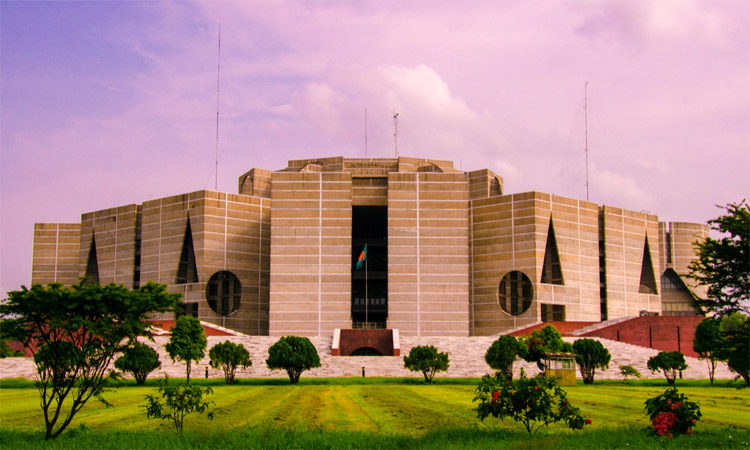
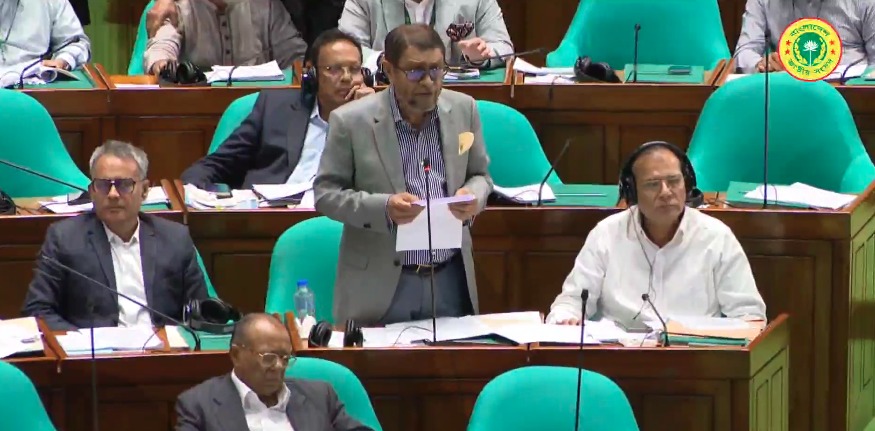
SANGSAD BHABAN, April 06, 2026 (BSS)- Finance Minister Amir Khosru Mahmud Chowdhury today placed the first quarter (July–Sept) budget implementation progress report of FY2025–26 in the Jatiya Sangsad, highlighting improved revenue collection, rising foreign exchange reserves and gradual macroeconomic stability despite global and domestic challenges.
In the tabled report in the House, the Finance Minister said total revenue collection recorded a growth of 17.7 percent in the first quarter of FY26, compared to 4.4 percent growth in the same period of the previous fiscal.
He said total government expenditure increased by 10 percent, while it was 14 percent during the same period of FY2024–25.
The minister informed the House that Annual Development Programme (ADP) implementation reached 4.58 percent of the total allocation, which was 3.97 percent in the same period of the previous fiscal year.
Khosru further said foreign exchange reserves increased from $24.86 billion on September 30, 2024 to around $31.43billion on September 30, 2025, indicating improving stability in the external sector.
According to the Finance Minister, export earnings grew up by 5.26 percent and import expenditure increased by 9.49 percent in the first quarter of FY26.
He said inflation stood at 9.45 percent at the end of September 2025, slightly lower than 9.97 percent recorded in the same period of the previous fiscal year.
The Finance Minister told the House that geopolitical tensions and the ongoing conflict in the Middle East have created uncertainty in global trade, which has affected export growth in developing countries including Bangladesh.
Despite global challenges and internal pressure, he said, Bangladesh’s economy is gradually moving towards stability due to reform initiatives, policy coordination and steady remittance inflows, which have strengthened foreign exchange reserves.
However, the minister noted that tariff barriers in global trade, increasing competition, high interest rates and internal constraints have put pressure on exports, private sector credit growth and investment, while revenue collection is also facing some shortfall.
He said inflation is not declining at the expected rate due to supply chain limitations, market management weaknesses and external variables, although contractionary fiscal and monetary policies are being followed.
The Finance Minister said Bangladesh Bank has increased policy interest rates and continued contractionary monetary policy to control inflation and aggregate demand, while targeted credit support is being maintained for agriculture, export-oriented industries and SMEs.
He added that strong domestic demand, abundant labour force and growing production capacity are supporting economic recovery.
The minister stressed the need for policy continuity, institutional capacity building, good governance, investment-friendly environment, export diversification and technology-based production to strengthen the economy further.
Expressing optimism, the Finance Minister said Bangladesh would be able to overcome all challenges and transform into a one-trillion-dollar economy by 2034 through collective efforts and realistic reform programmes.