News Flash
By Aminul Islam
DHAKA, April 21, 2026 (BSS) - The government is formulating the 'Electric Vehicle Industry Development Policy 2025' to build an environmentally friendly transportation system and accelerate industrialization in the country. The Ministry of Industries is undertaking this task.
The policy outlines an integrated framework including reducing carbon emissions, saving energy and creating new employment opportunities. Additionally, it sets out a roadmap for transforming the electric vehicle (EV) industry into a sustainable and competitive sector.
To this end, the policy proposes imposing a 1% Supplementary Duty (SD) on the import of industrial raw materials and components for manufacturers of electric vehicles and their parts and granting income tax exemption to manufacturing enterprises at the import, local purchase and supply stages until 2040. Furthermore, tax exemptions are proposed for the production of lead batteries and lithium-ion batteries used in electric vehicles. The drafting work has already been completed.
Sultana Yasmin, Joint Secretary of the Policy, Law, and International Cooperation sub-division of the Ministry of Industries, told BSS that this policy will be finalized within this year.
"The use of electric vehicles is expected to increase in the country in the future. This policy is being formulated with the goal of enabling the domestic production of electric vehicles and their parts. A draft has already been prepared and published on the ministry's website for stakeholder feedback. The policy will be finalized soon after discussions with relevant stakeholders."
The policy states that reducing carbon emissions in the transport sector is crucial to combating global warming and climate change impacts. Currently, the transport sector is one of the world's leading sources of greenhouse gas emissions. In this context, emphasis is placed on increasing the use of electric vehicles as an alternative to fossil fuel-dependent vehicles.
According to the policy's vision, the electric vehicle industry in the country will be transformed into a robust and sustainable industry. Its mission is to ensure an eco-friendly transportation system by reducing dependence on fossil fuels. It sets a target of significantly reducing carbon emissions in the transport sector by 2030.
Simultaneously, emphasis is placed on increasing local EV production, creating export potential, and developing a skilled workforce. The policy further said, climate change is increasing the frequency of natural disasters globally, posing a major threat to vulnerable countries like Bangladesh. Significant carbon emissions from the transport sector are exacerbating this situation. Therefore, special importance is attached to the use of electric vehicles.
The objectives of the policy include local EV production and technology development, export diversification, employment generation, and reducing the use of fossil fuel-dependent vehicles.
Various tax benefits and incentives have been included in the policy to attract investment in the EV sector. These include- up to 50% reduction in EV registration fees; exemption of Advance Income Tax (AIT) until 2030; low customs duties on imports; income tax exemption for manufacturing enterprises until 2040; and duty benefits on battery and component imports.
Furthermore, emphasis is placed on strengthening local component manufacturing, research, and development activities. This will foster the growth of domestic industry and create new employment opportunities. Plans to enhance competitiveness in the international market are also included.
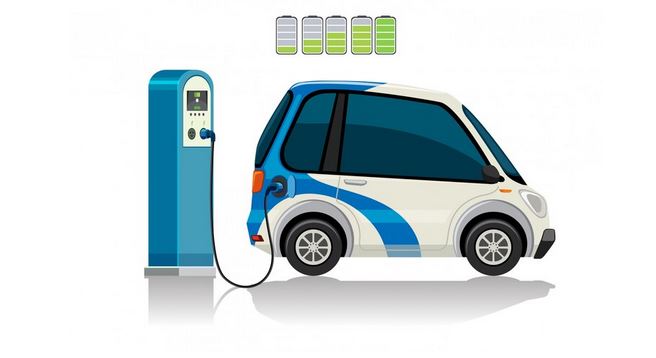
Initiatives will be taken to set up charging stations across the country to build supporting infrastructure for EV use. The public and private sectors will be encouraged in this regard, and charging facilities will be expanded using renewable energy. Plans also include incorporating EV charging facilities in new building constructions.
The policy emphasizes EV safety, battery management, and adherence to international standards. Vehicle registration, fitness, and quality control will follow existing laws and regulations. Additionally, the policy mentions that the country's vast number of three-wheeled electric vehicles (known as easy bikes) will be registered by BRTA after completing prescribed standards and testing.
Dealers, agents, importers, local manufacturers, and producers will not be allowed to hand over electric three-wheelers and motorcycles to buyers without registration.
The policy states that by 2030, at least 30% of vehicles purchased by government, semi-government, and autonomous bodies must include electric vehicles. A high-powered 'Electric Vehicle Industry Development Council' will be formed for the overall development of the EV industry. This council will oversee the implementation, coordination, monitoring, and evaluation of the policy.
Furthermore, an Implementation Committee and a Technical Committee will also be formed. The policy includes plans to establish research and innovation centers, develop skilled manpower, and include EV topics in technical education. This will help build a skilled human resource base in the long term.
Stakeholders believe that effective implementation of this policy will create new possibilities for environmental protection, energy savings, industrialization, and the use of modern technology in the country. At the same time, Bangladesh will be able to strengthen its position in the global electric vehicle market.