News Flash
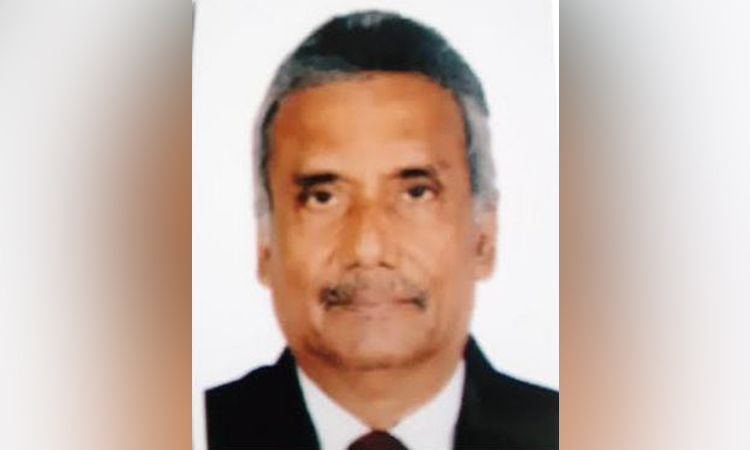
By Mohammed Shah Nowaz
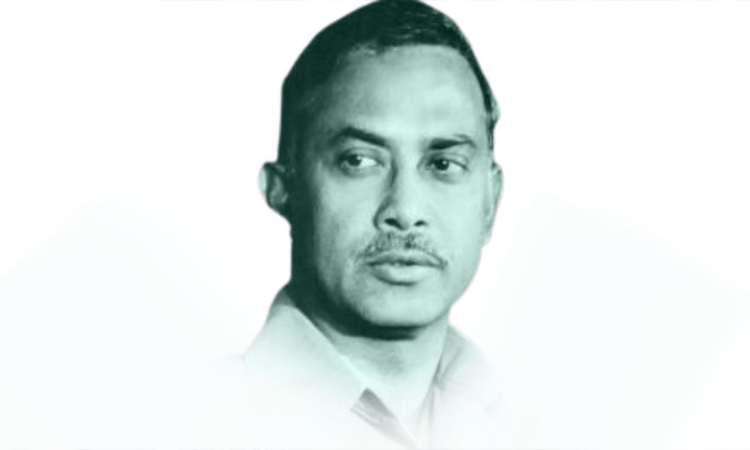
CHATTOGRAM, May 29, 2026 (BSS) - Nearly 45 years after the assassination of President Ziaur Rahman, veteran academic-turned-politician Prof. Arif Moinuddin still remembers the final words he heard from the slain leader -- words that, he says, reflected the essence of Zia's character and political philosophy.
"Nobody is close to me; I judge everyone on merit," President Zia had told him during their last private conversation at Chattogram Circuit House on the night of May 29, 1981.
Within hours, the President would be dead.
Now in his late seventies, Prof. Arif Moinuddin -- one of Zia's early political associates and a former deputy minister -- shared with BSS a vivid account of the Shaheed president's final visit to Chattogram, the atmosphere before the assassination and his personal memories of a leader he still regards as one of Bangladesh's most visionary statesmen.
"If this man had lived another five years, Bangladesh would have reached a completely different height," Prof. Arif said with visible emotion.
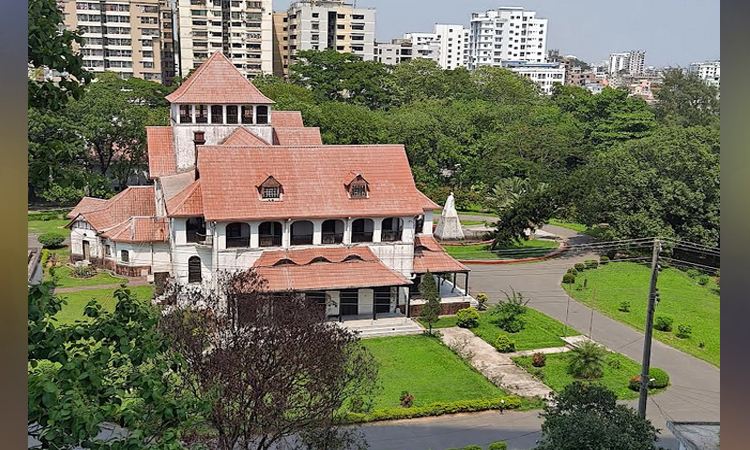
President Ziaur Rahman, a decorated freedom fighter and commander of the famed "Z Force" during the 1971 Liberation War, was assassinated at Chattogram Circuit House in the early hours of May 30, 1981, in what remains one of the most debated political killings in Bangladesh's history.
Prof. Arif was among the founders of JAGODAL, the political platform established by Zia before the formation of the Bangladesh Nationalist Party (BNP). A former professor at the History Department of the University of Chittagong, he later left academia to join nationalist politics and eventually served in Zia's cabinet as deputy minister for relief and rehabilitation.
Born into a politically prominent family, Arif was the son of Barrister Anowarul Azim, a member of the Bengal Legislative Assembly, while his mother, Begum Tohfatun Nessa, was elected an MLA in 1954 and later became the founding president of Chattogram Mohila Awami League.
Recalling his first encounter with Zia in 1976, Prof. Arif said he received a call summoning him to Chattogram Cantonment, where several prominent figures were waiting to meet the then Deputy Chief Martial Law Administrator.
"Among all of them, I got the chance to meet him first," he recalled. "After a brief introduction, he asked about my constituency and advised me to organize the youth."
That meeting marked the beginning of a close political association. According to Arif, he subsequently met Zia almost every month.
After becoming president, Zia invited him to Bangabhaban in October 1977 and spoke extensively about his dream of building a self-reliant Bangladesh through the "Swanirvar" programme.
"He wanted Bangladesh to become economically self-sufficient, especially in food production," Arif said. "He even dreamed of exporting food grain one day."
Inspired by Zia's vision, Arif organized students and young activists across Chattogram in support of the president's nationalist ideology and development agenda. He also claimed that the name "Jatiyatabadi Chhatra Dal" was first publicly used at a student rally he organized at Muslim Institute Hall in Chattogram.
Prof. Arif said the schedule for Zia's final Chattogram visit was arranged hurriedly.
"I received a phone call from BNP office secretary Col. Alauddin on May 28, asking me to be present at Tejgaon Airport the next morning," he said.
The presidential entourage included senior ministers and party leaders, among them BNP Secretary General Dr. Badruddoza Chowdhury. During the flight, Arif observed Zia continuously working through official files while seated beside Military Secretary Col. Mahfuz.
After arriving in Chattogram around 10 a.m., the President called Arif upstairs to the Circuit House lounge.
Standing on the balcony in dark sunglasses, Zia admired the beauty of the port city and its hilly view.
"He suddenly told me, 'Arif, why don't you stay in Chattogram? What a beautiful city. I want to build a house on a hill here,'" Arif recalled.
Moments later, BNP Standing Committee member Dr. A.F.M. Yusuf arrived, and Zia reportedly told him, "Find me a piece of land. I want to build a home here."
The entourage later joined Zia for Jumma prayers at the historic Chandanpura Mosque -- a stop that, according to Arif, had not been part of the official schedule.
Later that night at Circuit House, Zia summoned Arif again and discussed complaints he had heard from others about him.
"I answered all his questions," Arif said. "Then he advised me: 'Give up all these things and do serious politics.'"
At one stage, the President placed a hand on Arif's shoulder and remarked that a particular military officer did not support him. When Arif replied that he had supported the officer because he was considered close to the President, Zia instantly responded: "Nobody is close to me; I take everybody on merit."
"Around midnight, he told me to go home and stay near the telephone because he would call again," Arif said. "But he never could."
In the early hours of May 30, Chattogram was battered by heavy rain and storms. Around 3 a.m., Arif's telephone began ringing repeatedly.
"The calls were either informing me about heavy gunfire at Circuit House or asking what had happened there," he recalled.
At dawn, he rushed toward Circuit House but found the surroundings eerily silent.
"All the gates were open, yet the place looked ghostly," he said.
At the entrance, a senior police officer warned him to leave immediately.
"He told me, 'Sir, leave this place. The President has been killed.'"
Arif later saw senior civil and military officials gathered outside Darbar Hall, including Military Secretary Col. Mahfuz.
He also recalled seeing barrister Nazmul Huda arriving from the Chattogram Club side.
"When I told him the President had been killed, he immediately said, 'Then Justice Sattar becomes Acting President of Bangladesh,'" Arif recounted. "I was stunned because I did not see any sign of grief on his face."
Prof. Arif described Zia as extraordinarily simple in his personal life despite holding the country's highest office.
"As a man, he was one hundred percent honest materially," he said. "He was entitled to a 10-katha plot at DOHS as army chief, but he never took it."
According to him, Zia owned only three safari suits - white, grey and cream - and often had them washed overnight and dried under a fan for reuse the next morning.
"He worked almost 24 hours a day," Arif said. "It was difficult to know when he actually slept."
He also remembered the respect Zia received abroad, particularly during a state visit to North Korea, where then-President Kim Il Sung reportedly accorded him exceptional honours during an international gathering attended by representatives from 111 countries.
Prof. Arif believes the soldiers who participated in the assassination were merely instruments in a larger conspiracy. "This was a pre-planned killing," he asserted.
He further revealed that years later, former Juba League leader "Chimbuk Kamal" had told him about an alleged warning received from an army intelligence officer before Zia's arrival in Chattogram.
According to Arif, the officer warned: "Tell someone to stop President Zia from coming to Chattogram. They will kill him."
Arif said he never learned to whom the information had been conveyed.
"Even today, the masterminds, the abettors and the real motive behind the killing of such a visionary leader remain shrouded in mystery," he said.
For Prof. Arif Moinuddin, however, one memory remains crystal clear: the image of a tireless leader standing on the balcony of Chattogram Circuit House, speaking of merit, discipline and dreams for a self-reliant Bangladesh -- unaware that his final night had already begun.