News Flash
WASHINGTON, United States, March 30, 2026 (BSS/AFP) - US President Donald
Trump pushed concerns about surging world prices aside Monday and threatened
to destroy Iran's oil wells, power plants and main export terminal if Tehran
does not quickly accept a peace deal.
An earlier Trump comment warning of a possible assault by US ground troops to
seize Iran's Kharg Island oil facilities had already sent prices higher, but
the US leader then doubled down in a combative social media post.
Trump expressed confidence that a negotiated settlement would soon be reached
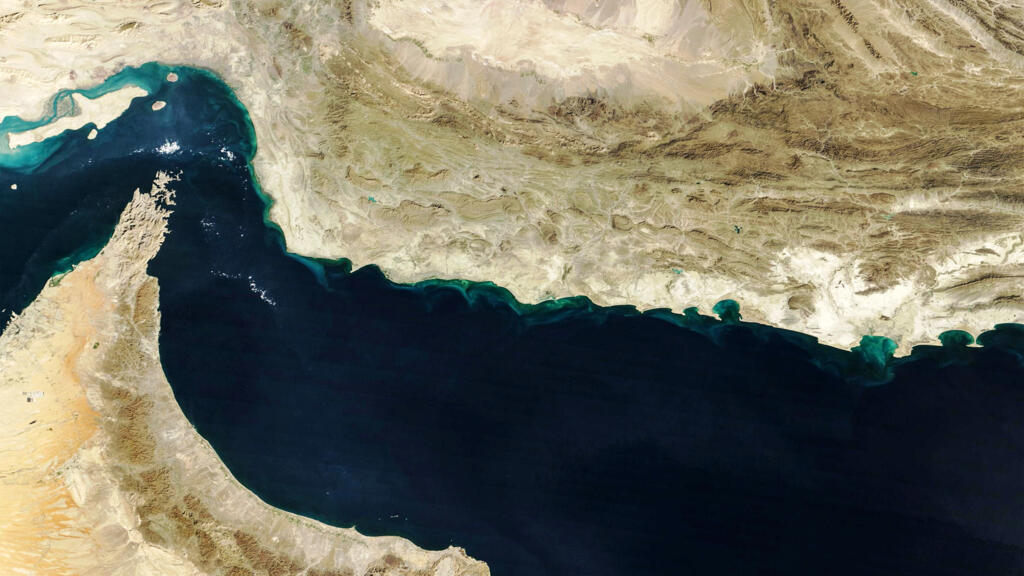
but warned that if it was not -- or if Iran continued to block the Strait of
Hormuz to most sea traffic -- US forces would "blow up" Kharg Island and all
of Iran's oil wells and electricity generation.
Iran has previously threatened that if its key economic sites face further US
and Israeli strikes it will target the energy infrastructure of its oil and
gas-rich Arab neighbours on the Gulf, and the month-old war has already
inflicted havoc on the global economy and plunged markets into turmoil.
Market experts warned that any US ground operation or wider Iranian
retaliation could send oil prices to levels not seen since the July 2008
commodity boom, when the cost of world benchmark crude Brent hit close to
$150 per barrel -- and could rise far more.
Brent has already risen in price by nearly 60 percent this month, and the US
benchmark WTI by more than half.
"If the US were to launch a ground invasion of Iran, possibly taking the
Kharg Island, or if Tehran were to intensify retaliatory strikes on energy
infrastructure or fully close the Strait, projections of $200 (a barrel) oil
will not be an otherworldly supposition anymore," analyst Tamas Varga of PVM
Energy said.
As Israel pressed its offensive against Iran-backed Hezbollah in south
Lebanon -- hitting, an official told AFP, an army checkpoint and killing a
Lebanese soldier -- Indonesia confirmed on Monday that one of its
peacekeepers was killed after the UN force said a projectile hit one of its
positions.
Separately, the Israeli military said one of its soldiers was killed on
Sunday in combat in southern Lebanon, bringing to six the number of troops
killed since fighting with Hezbollah began this month.
- Diplomatic efforts -
On the ground there appeared to be no let-up in hostilities. Israel said its
air defence batteries responded to "missiles launched from Iran", after
earlier announcing it was striking "terror regime military infrastructure
across Tehran".
Israel confirmed that in recent days it had hit the Imam Hossein University
in Tehran, which it says is used by Iran's Islamic Revolutionary Guards Corps
(IRGC) for advanced weapons research. Tehran has warned it could strike US
universities across the Middle East.
On the diplomatic front, Pakistan -- acting as a go-between for Washington
and Tehran -- hosted foreign ministers from Saudi Arabia, Turkey and Egypt in
Islamabad on Sunday for talks on the crisis.
Pakistan's Foreign Minister Ishaq Dar said they had discussed how to "bring
an early and permanent end to the war."
He said Iran and the United States had expressed "confidence in Pakistan to
facilitate the talks" and that he had spoken to his Chinese counterpart Wang
Yi as well as UN Secretary-General Antonio Guterres and other foreign
ministers who also backed the idea.
Nevertheless, the speaker of Iran's parliament accused Washington of using
diplomacy as a smoke screen.
Despite making diplomatic overtures, including proposing a 15-point plan to
end the war, the United States has also been sending more military assets
into the region, including an amphibious assault ship carrying 3,500 Marines.
- Sleepless nights -
The weeks of strikes have also taken a heavy toll on ordinary people in Iran.
"I miss a peaceful night's sleep," an artist in Tehran told AFP, saying
night-time strikes were "so intense it felt like all of Tehran was shaking".
The war has escalated into a regional conflagration as Tehran retaliates with
attacks on Gulf states and virtually seals the critical Strait of Hormuz oil
shipping lane.
Iran says it has closed the Strait of Hormuz, which previously accounted for
a quarter of the world's seaborne oil trade and a fifth of liquefied natural
gas shipments, to vessels from hostile nations.