News Flash
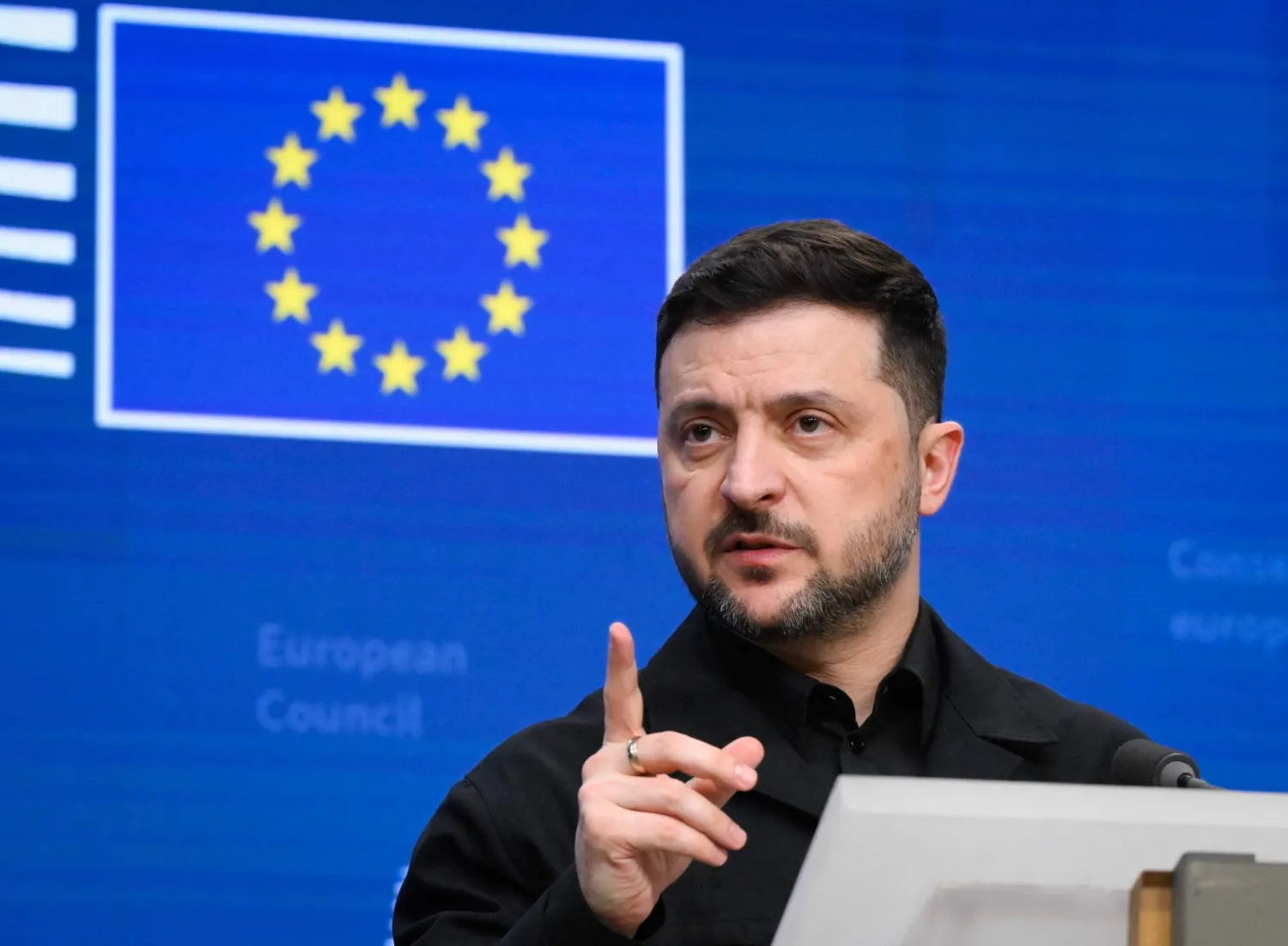
NICOSIA, April 23, 2026 (BSS/AFP) - EU leaders will welcome Ukrainian President Volodymyr Zelensky on Thursday in Cyprus to celebrate the release of a 90-billion-euro ($105 billion) loan for Kyiv after a prolonged deadlock.
Preliminary approval for the badly needed money came on Wednesday but a definitive sign-off is expected by Thursday, before European Union leaders hold talks with Zelensky in Cyprus's Ayia Napa marina.
The funds were blocked after a bitter row broke out between Hungary's nationalist premier Viktor Orban and Zelensky.
Orban said he would only lift his veto after Ukraine fixed a pipeline damaged by a Russian strike. After 16 years in power, Orban suffered a crushing election defeat to pro-EU opposition figure Peter Magyar in an election this month.
And the standoff was resolved when Zelensky said Tuesday repairs had been completed and officials said the next day that Ukraine had restarted pumping oil to Hungary and Slovakia.
Moscow ally Orban has frequently been a thorn in the EU's side over Ukraine and EU officials hope on issues related to Kyiv, decisions will be made faster without his opposition.
Diplomats were relieved by Wednesday's green light. One EU diplomat said Zelensky's Cyprus visit was "symbolically important" now that the EU money will help support Kyiv against Russia in 2026 and 2027.
Orban, who will only step down next month, will not attend meetings in Cyprus on Thursday and Friday, which will be informal, with no concrete decisions expected.
- Beyond Ukraine -
Ukraine will not be the only conflict on the menu during the talks in Cyprus, which holds the rotating EU presidency.
They will also discuss the Middle East war and its fallout, including skyrocketing energy prices.
Cyprus was sucked into the war in March after a drone strike on a British base on the Mediterranean island.
European leaders will be joined on Friday by their regional counterparts for what a senior EU official described as "intensive dialogue".
Expected to join them are Lebanese President Joseph Aoun, Egyptian President Abdel Fattah al-Sisi, Syrian President Ahmed al-Sharaa, and Jordanian Crown Prince Hussein bin Abdullah.
During a working lunch, they will discuss the situation in Lebanon, where there is currently a ceasefire. More than 2,400 people have been killed and more than a million displaced in Israeli strikes in the country since Iran-backed Hezbollah drew the nation into the war on March 2.
A key issue for Europe is the Strait of Hormuz whose effective closure has sent oil prices soaring and affected supply of jet fuel in Europe.
The official said the bloc was "ready to contribute" to keep the strait open "when the conditions are met", noting that any assistance depended on "events".
"We certainly hope that the ceasefire is kept and maintained."
- Budget -
The European Union's 2028-2034 budget will also be discussed for the first time, with hopes of securing a final agreement by the end of 2026.
The EU executive wants a bigger budget worth around two trillion euros ($2.3 trillion) though governments are reluctant to pay more.
That's why despite the energy shocks, the EU has little wiggle room to spend more as it must find money to pay off Covid-era loans.
But as with anything related to money in the EU, France and Germany are diametrically opposed, with Paris calling for more European investment and Berlin arguing for fiscal restraint.
The clock is ticking however. European officials fear that without a deal before France's presidential election next year, there is a risk that a far-right leader could cut contributions to the EU by France, the bloc's second-biggest economy.