News Flash
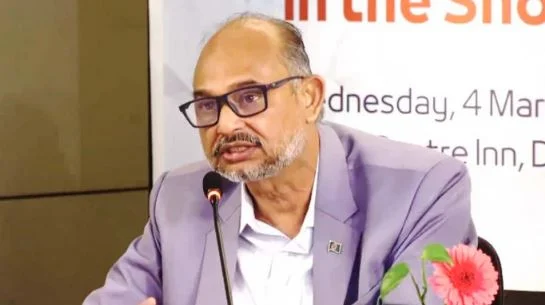
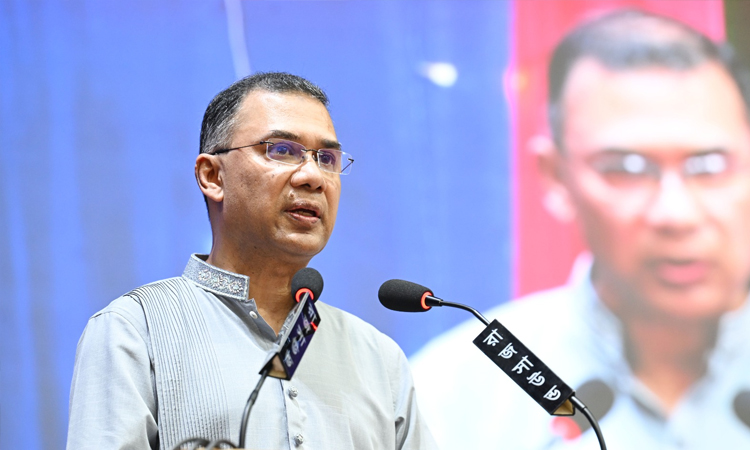
DHAKA, March 27, 2026 (BSS) – Dr Rashed Al Mahmud Titumir, Prime Minister's Adviser on Ministry of Finance and Planning, said that no political considerations are being used in selecting beneficiaries for social safety net programmes, including Family Card and Farmer Card.
“Through rigorous data verification, only actual deserving and eligible individuals are being brought under these benefits,” he said while speaking at a talk-show on a private television channel on Thursday night.
During the talk-show, the Adviser detailed the government's economic policies, social security initiatives, and energy sector management.
Titumir noted that in the past, research indicated 35% to 50% wastage in the social safety net sector.
“The present government is prioritizing the reduction of this wastage through digitalization and the coordination of various databases rather than cutting down on benefits,” he added.
He explained that beneficiary selection is now based on Proxy Means Test (PMT) scores, which ensures transparency and prevents the exclusion of the needy or the inclusion of unqualified individuals that occurred previously.
He reiterated that no political influence is being allowed in these processes.
Highlighting the government's commitment to the agricultural sector, the Adviser mentioned that a significant decision was made in the first cabinet meeting to waive agricultural loans up to Taka 10,000.
This move is expected to provide substantial relief to farmers and livestock rearers, he mentioned.
The Farmer Card will be launched experimentally on Pohela Boishakh, initially offering limited services with a plan to expand to 10 services, he informed.
He said that these chip-based digital cards will be linked to the banking system, helping integrate farmers into the formal financial system.
“Furthermore, Family Card has been introduced to bring low-income families under the social safety net to reduce poverty. The government is also initiating honorariums for Imams, Muazzins, priests, and other religious leaders,” he added.
The Adviser revealed that the government is working towards a "One Citizen, One Card, One Digital Portfolio" concept.
This involves creating an integrated national database by coordinating National Identity Card (NID), birth registrations, and other data to simplify citizen services, he added.
Regarding funding, Titumir said there are no plans to increase taxes to implement social safety programmes. Instead, the government aims to generate funds by reducing waste, fraud, and irregularities, while also seeking low-interest loans from international agencies, he added.
Addressing the energy situation, the Adviser acknowledged that the government inherited a crisis caused by long-term mismanagement and lack of coordination in production and distribution.
He assured that the government would not take any steps, such as hiking diesel prices, that could trigger inflation or adversely affect agricultural production.
He dismissed rumors of fuel supply shortages, attributing such claims to misinformation.
However, he warned of strict action against anyone creating artificial crises or involved in hoarding.
The Adviser concluded by stating that the government’s ultimate goal is the "democratization of the economy," building an economic system where everyone's participation is ensured through transparency and efficiency.